NBA Air Software
NBA Air Software
Client: NBA / Verizon
Agency: UX Magicians
Role: Lead Product Designer
Teams: Remote Leadership Team, 3 Designers, 5 Engineers
Duration: 12 months
Goal: Build a customisable system that the full team can use and enjoy
Outcome: A successful management and analytical team system that the team loved.
Client: NBA / Verizon
Agency: UX Magicians
Role: Lead Product Designer
Teams: Remote Leadership Team, 3 Designers, 5 Engineers
Duration: 12 months
Goal: Build a customisable system that the full team can use and enjoy
Outcome: A successful management and analytical team system that the team loved.
Project Introduction
Project Introduction
Professional basketball teams operate in an environment where preparation, communication, and performance analysis must happen continuously throughout the season. Coaches, analysts, and support staff rely on a wide range of tools to manage training schedules, analyse opponents, monitor player performance, and coordinate team logistics.
Across organisations within the National Basketball Association, much of this information historically existed across separate systems: calendars and logistics tools for scheduling, analytics platforms for performance data, communication tools for announcements, and training documents managed independently by coaching staff.
The NBA AIR platform was designed to bring these elements together into a single internal tool for teams. The goal was to create a centralised digital environment where coaches, analysts, and players could access critical information about team operations in one place.
The platform combined scheduling, team communication, roster management, performance analytics, opponent insights, and individual training plans into a unified application.
My role in the project involved helping design the system architecture and user experience for the platform, ensuring that it supported the daily workflow of professional basketball teams while remaining simple enough to use during the fast-paced rhythm of a competitive season.
The challenge was not simply to build a sports application. It was to design a system that could support the operational complexity of an elite basketball organisation.
Professional basketball teams operate in an environment where preparation, communication, and performance analysis must happen continuously throughout the season. Coaches, analysts, and support staff rely on a wide range of tools to manage training schedules, analyse opponents, monitor player performance, and coordinate team logistics.
Across organisations within the National Basketball Association, much of this information historically existed across separate systems: calendars and logistics tools for scheduling, analytics platforms for performance data, communication tools for announcements, and training documents managed independently by coaching staff.
The NBA AIR platform was designed to bring these elements together into a single internal tool for teams. The goal was to create a centralised digital environment where coaches, analysts, and players could access critical information about team operations in one place.
The platform combined scheduling, team communication, roster management, performance analytics, opponent insights, and individual training plans into a unified application.
My role in the project involved helping design the system architecture and user experience for the platform, ensuring that it supported the daily workflow of professional basketball teams while remaining simple enough to use during the fast-paced rhythm of a competitive season.
The challenge was not simply to build a sports application. It was to design a system that could support the operational complexity of an elite basketball organisation.
Project Story
Project Story
Professional basketball teams generate enormous amounts of information throughout a season. Training sessions, travel schedules, tactical preparation, opponent analysis, and individual player development all require coordination between coaches, analysts, medical staff, and players.
During research into team workflows, it became clear that this information was often fragmented across different tools.
Schedules might exist in shared calendars, tactical preparation in video analysis systems, training plans in coaching documents, and performance statistics within specialised analytics platforms. Communication between staff and players frequently relied on messaging systems or meetings.
This fragmentation created inefficiencies. Coaches and staff needed to switch between tools to gather the information required for daily decision-making.
For players, accessing training plans, schedules, and team updates often required multiple sources of information.
The opportunity for NBA AIR was to create a single operational hub where the most important aspects of team management could be accessed quickly and clearly.
Instead of navigating several platforms, coaches and players could rely on one system that connected the operational and strategic elements of the team environment.
Professional basketball teams generate enormous amounts of information throughout a season. Training sessions, travel schedules, tactical preparation, opponent analysis, and individual player development all require coordination between coaches, analysts, medical staff, and players.
During research into team workflows, it became clear that this information was often fragmented across different tools.
Schedules might exist in shared calendars, tactical preparation in video analysis systems, training plans in coaching documents, and performance statistics within specialised analytics platforms. Communication between staff and players frequently relied on messaging systems or meetings.
This fragmentation created inefficiencies. Coaches and staff needed to switch between tools to gather the information required for daily decision-making.
For players, accessing training plans, schedules, and team updates often required multiple sources of information.
The opportunity for NBA AIR was to create a single operational hub where the most important aspects of team management could be accessed quickly and clearly.
Instead of navigating several platforms, coaches and players could rely on one system that connected the operational and strategic elements of the team environment.
The breakthrough in the project came when the platform evolved from a team management tool into a basketball operations ecosystem.
Rather than simply storing information, the system was designed to support the daily workflow of an entire organisation.
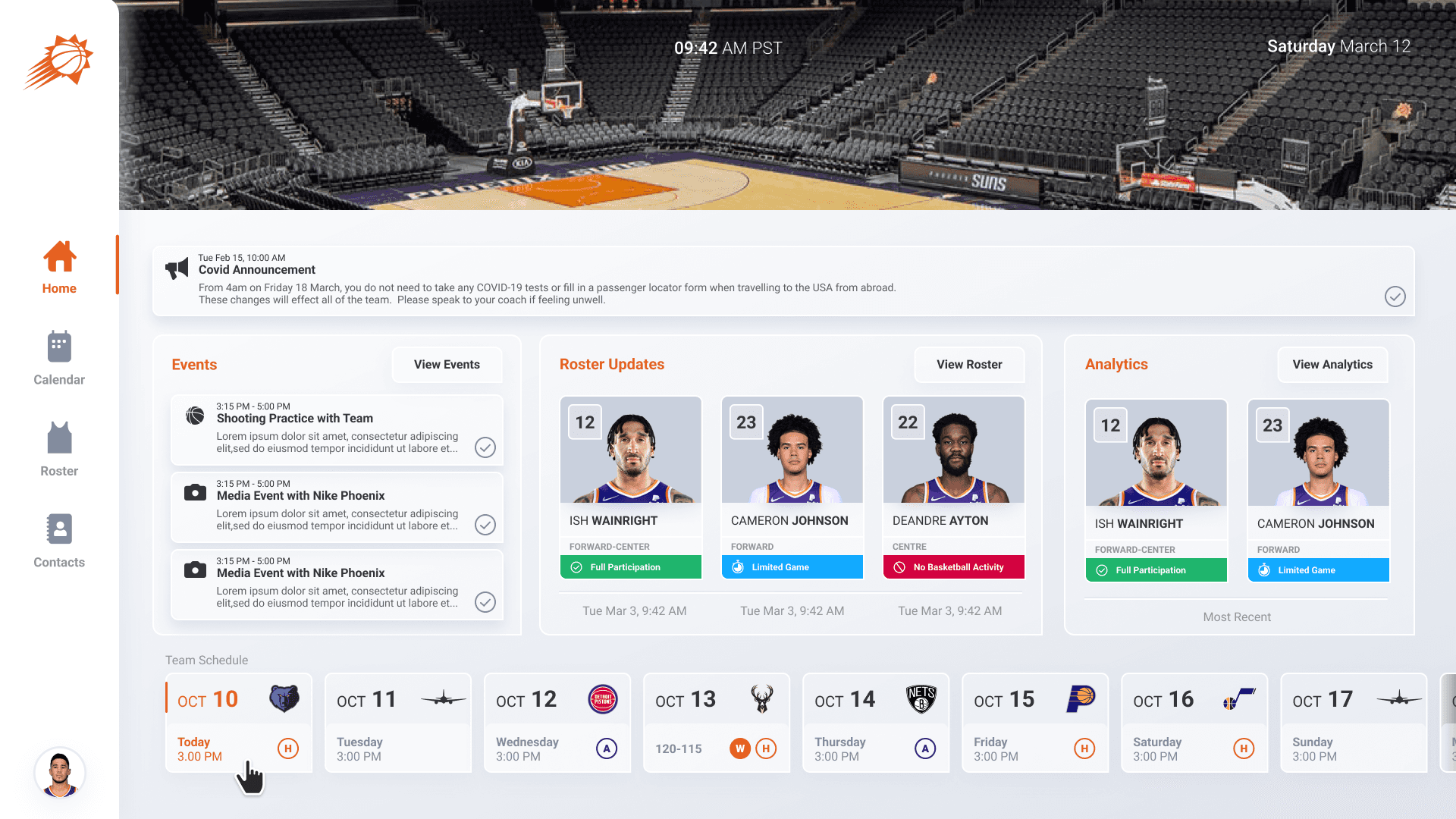
At the core of the platform was a centralised dashboard that gave users immediate visibility into key operational information. Players could view upcoming training sessions, team announcements, and personal development plans, while coaches could track team schedules, performance metrics, and tactical preparation.
The platform introduced several interconnected systems.
A team calendar allowed coaches to organise practices, travel schedules, meetings, and games within a single interface. Updates could be communicated instantly to players and staff.
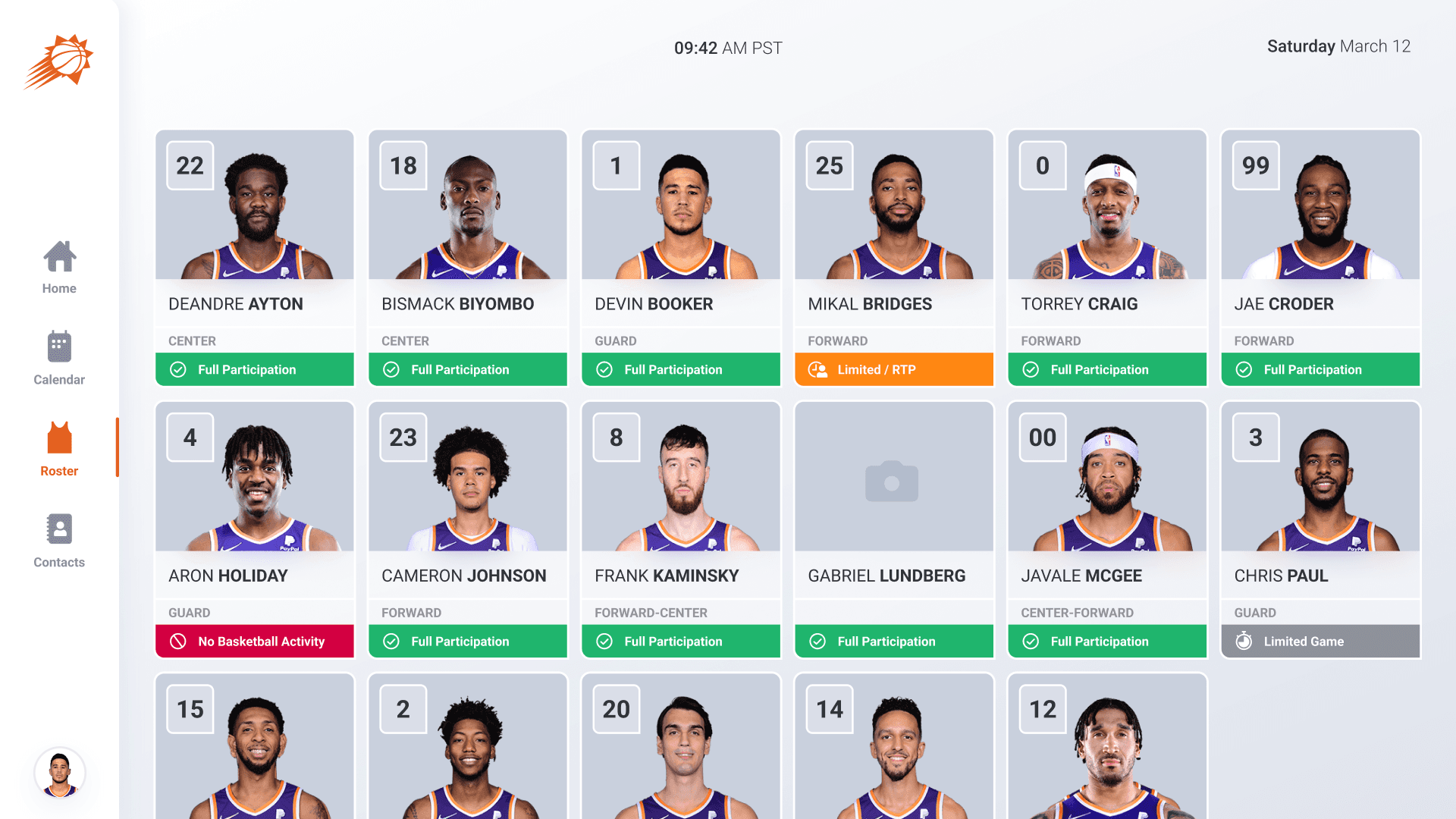
A roster management system provided a clear overview of team personnel, player availability, and role assignments.
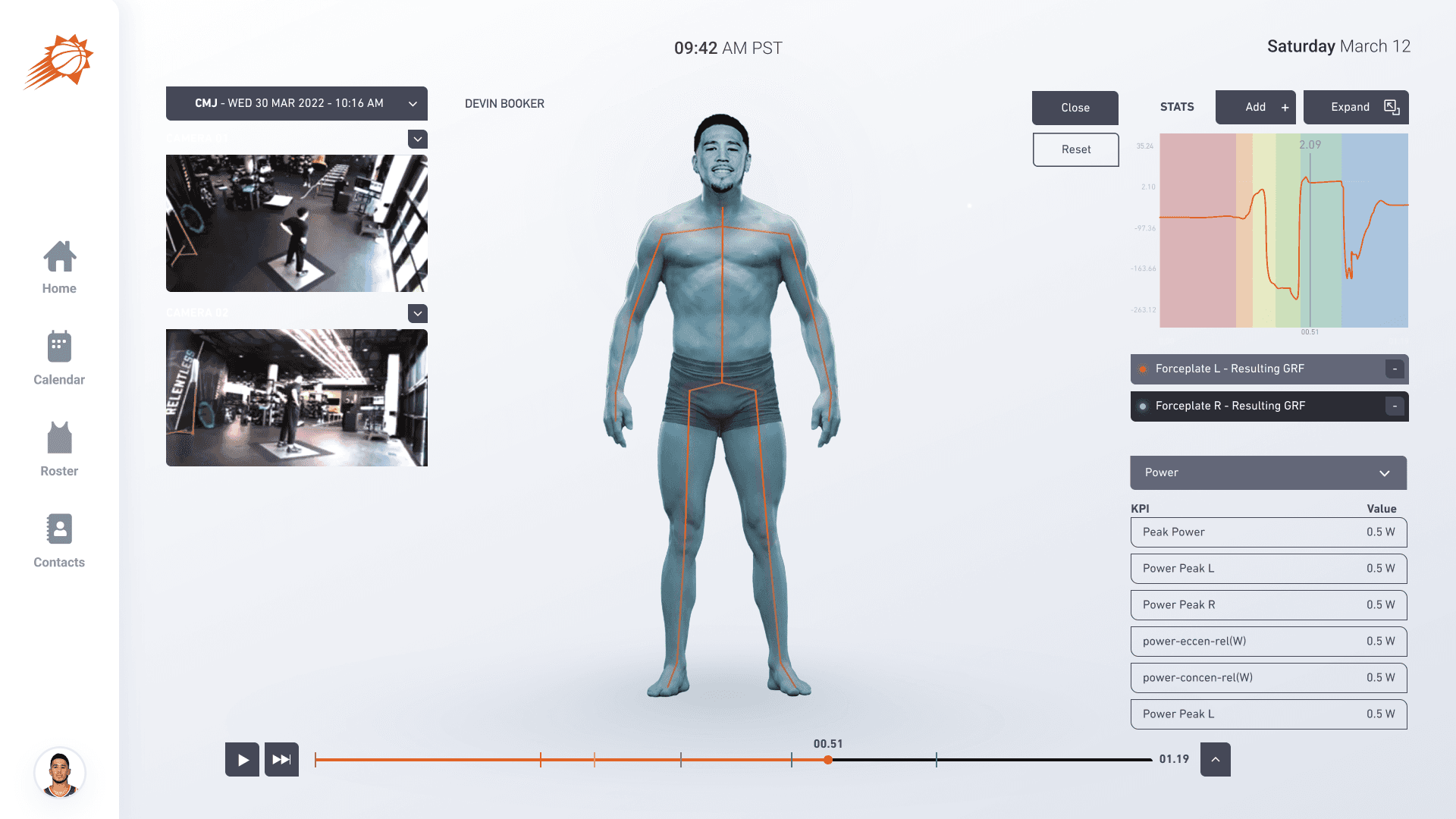
The platform also integrated performance analytics, allowing coaches to analyse both team statistics and individual player performance. Historical performance data could be used to evaluate trends and inform tactical decisions.
Opponent analysis tools enabled teams to review data and tendencies from competing teams, supporting more informed game preparation.
Finally, individual training plans allowed coaching staff to create structured development programs for players, ensuring that performance goals and conditioning requirements were clearly communicated.
Together, these capabilities transformed NBA AIR into a central digital environment where the operational, analytical, and strategic aspects of team management could work together.
The breakthrough in the project came when the platform evolved from a team management tool into a basketball operations ecosystem.
Rather than simply storing information, the system was designed to support the daily workflow of an entire organisation.
At the core of the platform was a centralised dashboard that gave users immediate visibility into key operational information. Players could view upcoming training sessions, team announcements, and personal development plans, while coaches could track team schedules, performance metrics, and tactical preparation.
The platform introduced several interconnected systems.
A team calendar allowed coaches to organise practices, travel schedules, meetings, and games within a single interface. Updates could be communicated instantly to players and staff.
A roster management system provided a clear overview of team personnel, player availability, and role assignments.
The platform also integrated performance analytics, allowing coaches to analyse both team statistics and individual player performance. Historical performance data could be used to evaluate trends and inform tactical decisions.
Opponent analysis tools enabled teams to review data and tendencies from competing teams, supporting more informed game preparation.
Finally, individual training plans allowed coaching staff to create structured development programs for players, ensuring that performance goals and conditioning requirements were clearly communicated.
Together, these capabilities transformed NBA AIR into a central digital environment where the operational, analytical, and strategic aspects of team management could work together.
As the concept developed, the benefits of integrating these systems became increasingly apparent.
For coaches and team staff, the platform reduced the time required to manage schedules, share information, and analyse performance data. Instead of coordinating across multiple tools, they could access key insights and operational information from a single dashboard.
Players benefited from clearer visibility into their schedules, training plans, and performance metrics. This transparency helped create a stronger connection between coaching strategy and individual development.
The integration of analytics and opponent data also created new opportunities for tactical preparation. Coaches could review team trends and opposing team tendencies while simultaneously planning practices and game strategies.
By bringing these capabilities together, NBA AIR helped streamline the operational workflow of a professional basketball team.
What began as a team management tool ultimately evolved into a digital infrastructure designed to support the entire competitive ecosystem of a basketball organisation.
As the concept developed, the benefits of integrating these systems became increasingly apparent.
For coaches and team staff, the platform reduced the time required to manage schedules, share information, and analyse performance data. Instead of coordinating across multiple tools, they could access key insights and operational information from a single dashboard.
Players benefited from clearer visibility into their schedules, training plans, and performance metrics. This transparency helped create a stronger connection between coaching strategy and individual development.
The integration of analytics and opponent data also created new opportunities for tactical preparation. Coaches could review team trends and opposing team tendencies while simultaneously planning practices and game strategies.
By bringing these capabilities together, NBA AIR helped streamline the operational workflow of a professional basketball team.
What began as a team management tool ultimately evolved into a digital infrastructure designed to support the entire competitive ecosystem of a basketball organisation.
Conclusion
Conclusion
The NBA AIR project explored how digital platforms could transform the operational environment of professional basketball teams.
By bringing together scheduling, communication, analytics, and player development within a single application, the platform simplified the way teams organised information and prepared for competition.
Instead of relying on fragmented systems, coaches and players could interact with a unified platform that connected operational planning with performance insights.
More broadly, the project demonstrated how sports organisations can benefit from integrated digital tools that support both the strategic and logistical aspects of team management.
As professional sports continue to embrace data-driven decision-making, platforms like NBA AIR represent an important step toward more connected and intelligent team operations.
The NBA AIR project explored how digital platforms could transform the operational environment of professional basketball teams.
By bringing together scheduling, communication, analytics, and player development within a single application, the platform simplified the way teams organised information and prepared for competition.
Instead of relying on fragmented systems, coaches and players could interact with a unified platform that connected operational planning with performance insights.
More broadly, the project demonstrated how sports organisations can benefit from integrated digital tools that support both the strategic and logistical aspects of team management.
As professional sports continue to embrace data-driven decision-making, platforms like NBA AIR represent an important step toward more connected and intelligent team operations.
Takeaways
Takeaways
The NBA AIR project highlighted several important lessons about designing software for professional sports environments.
First, sports organisations operate as complex ecosystems involving players, coaches, analysts, and support staff. Digital tools must support the workflows of all these roles simultaneously.
Second, centralising operational information significantly improves efficiency. When schedules, analytics, and communication exist within one platform, teams can focus more on preparation and performance.
Third, data becomes most valuable when integrated directly into decision-making processes. Providing coaches with accessible performance insights helps translate analytics into actionable strategy.
Finally, simplicity is essential in high-performance environments. Even sophisticated analytical tools must remain intuitive so they can be used quickly during the fast pace of a professional season.
The NBA AIR project highlighted several important lessons about designing software for professional sports environments.
First, sports organisations operate as complex ecosystems involving players, coaches, analysts, and support staff. Digital tools must support the workflows of all these roles simultaneously.
Second, centralising operational information significantly improves efficiency. When schedules, analytics, and communication exist within one platform, teams can focus more on preparation and performance.
Third, data becomes most valuable when integrated directly into decision-making processes. Providing coaches with accessible performance insights helps translate analytics into actionable strategy.
Finally, simplicity is essential in high-performance environments. Even sophisticated analytical tools must remain intuitive so they can be used quickly during the fast pace of a professional season.
Prototype
Prototype
More Work