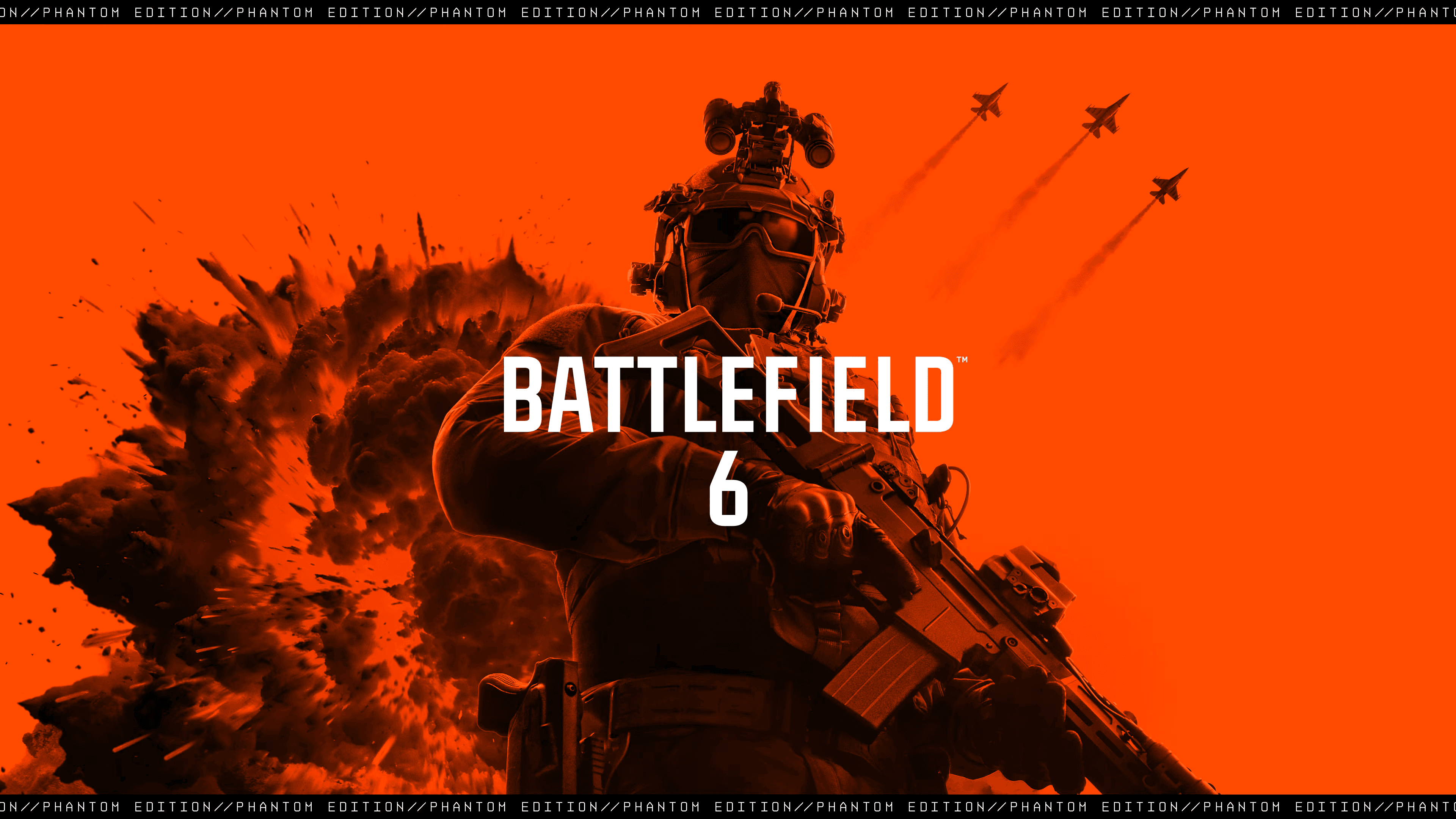
Battlefield 6
Battlefield 6
Client: Electronic Arts
Agency: BF Studios
Role: Senior Experience Designer (Lead on various parts)
Teams: 4 Global teams, 200+people
Duration: 32 months
Goal: Rebuild the Battlefield IP to become the most successful Battlefield ever made.
Outcome: The greatest Battlefield winning multiple awards and leading as the best FPS game of 2025 with enormous success.
Client: Electronic Arts
Agency: BF Studios
Role: Senior Experience Designer (Lead on various parts)
Teams: 4 Global teams, 200+people
Duration: 32 months
Goal: Rebuild the Battlefield IP to become the most successful Battlefield ever made.
Outcome: The greatest Battlefield winning multiple awards and leading as the best FPS game of 2025 with enormous success.
Project Introduction
Project Introduction
Designing for a major AAA military franchise means operating at the intersection of realism, gameplay, scale, and player expectation. Few franchises carry the weight of this challenge more than the Battlefield series, where players expect massive warfare, tactical freedom and immersive military systems operating at extraordinary scale.
On Battlefield 6, my role focused heavily on the hardware systems, guns, vehicles, gadgets, as well as broader gameplay areas such as the firing range, soldier manouverability, deploy map and key bindings.
A core philosophy I introduced into this work was what I coined as “grounded in reality.” Rather than treating military hardware as purely gameplay abstractions, the objective was to push systems closer to real-world functional logic by researching actual vehicles, military equipment, and tactical technologies in detail. This approach helped ensure that hardware not only looked believable, but also behaved in ways that reflected authentic operational design principles.
The challenge was to preserve the scale and excitement Battlefield is known for while embedding greater realism into the systems that players interact with most.
Designing for a major AAA military franchise means operating at the intersection of realism, gameplay, scale, and player expectation. Few franchises carry the weight of this challenge more than the Battlefield series, where players expect massive warfare, tactical freedom and immersive military systems operating at extraordinary scale.
On Battlefield 6, my role focused heavily on the hardware systems, guns, vehicles, gadgets, as well as broader gameplay areas such as the firing range, soldier manouverability, deploy map and key bindings.
A core philosophy I introduced into this work was what I coined as “grounded in reality.” Rather than treating military hardware as purely gameplay abstractions, the objective was to push systems closer to real-world functional logic by researching actual vehicles, military equipment, and tactical technologies in detail. This approach helped ensure that hardware not only looked believable, but also behaved in ways that reflected authentic operational design principles.
The challenge was to preserve the scale and excitement Battlefield is known for while embedding greater realism into the systems that players interact with most.
Project Story
Project Story
In the project, one of the largest opportunities was the hardware ecosystem itself. Battlefield has always featured a broad range of vehicles, weapons and gadgets, but ensuring these systems felt truly believable required deeper research and stronger design alignment with the global teams.
This led to a more research-driven approach focused on real-world military hardware, tactical systems, and equipment functionality. Studying actual vehicles, interfaces, deployment tools and operational military technologies allowed the design process to move beyond surface aesthetics and into functional authenticity.
This philosophy influenced not only visual design but also interaction logic, the full experience. Vehicles needed to feel like they are real systems. Gadgets needed to feel operationally credible. Deploy systems needed to reflect strategic military thinking rather than simple menu navigation.
The phrase “grounded in reality” became a guiding principle—ensuring that every layer of hardware and player interaction was informed by real-world references.
At the same time, Battlefield’s scale meant that these systems had to remain accessible. The challenge was not to simulate reality to the point of high complexity, but to borrow from reality in ways that enhanced immersion, quality, and player trust.
This balancing act between realism and playability became central to the project.
In the project, one of the largest opportunities was the hardware ecosystem itself. Battlefield has always featured a broad range of vehicles, weapons and gadgets, but ensuring these systems felt truly believable required deeper research and stronger design alignment with the global teams.
This led to a more research-driven approach focused on real-world military hardware, tactical systems, and equipment functionality. Studying actual vehicles, interfaces, deployment tools and operational military technologies allowed the design process to move beyond surface aesthetics and into functional authenticity.
This philosophy influenced not only visual design but also interaction logic, the full experience. Vehicles needed to feel like they are real systems. Gadgets needed to feel operationally credible. Deploy systems needed to reflect strategic military thinking rather than simple menu navigation.
The phrase “grounded in reality” became a guiding principle—ensuring that every layer of hardware and player interaction was informed by real-world references.
At the same time, Battlefield’s scale meant that these systems had to remain accessible. The challenge was not to simulate reality to the point of high complexity, but to borrow from reality in ways that enhanced immersion, quality, and player trust.
This balancing act between realism and playability became central to the project.

The key moment in the project came when this philosophy expanded beyond individual hardware elements and began influencing broader gameplay systems and people.
The gun, vehicle and gadget ecosystems were refined by teams to feel more operationally authentic, with systems designed around believable functional logic. Rather than simply creating game design and interfaces for gameplay, the work helped shape how these systems should act as military-grade tools.
This approach also extended into the deploy map, one of Battlefield’s most strategically important systems. Deployment is not just menu navigation—it shapes how players understand the battlefield, strategic opportunities, and operational readiness. By improving this system, the experience became more grounded, tactical, and cohesive. The understanding of the battlefield and the speed with clarity was needed to return the player back in successfully.
The firing range provided another opportunity to reinforce system credibility. It acted as both a training environment and a validation space, where players could better understand hardware, weapons, and gadgets through clearer system execution. Changing their weapons to test what works best for them.
Beyond specific features, my contribution also involved helping elevate the quality of execution across the broad set of features, ensuring that implementation matched the intended level of realism and polish. In large-scale AAA development, feature breadth can often challenge consistency, so maintaining quality across many systems became an important part of my role.
This phase transformed my work from feature design into system-wide quality leadership, where authenticity, usability, and execution quality were all interconnected.
The key moment in the project came when this philosophy expanded beyond individual hardware elements and began influencing broader gameplay systems and people.
The gun, vehicle and gadget ecosystems were refined by teams to feel more operationally authentic, with systems designed around believable functional logic. Rather than simply creating game design and interfaces for gameplay, the work helped shape how these systems should act as military-grade tools.
This approach also extended into the deploy map, one of Battlefield’s most strategically important systems. Deployment is not just menu navigation—it shapes how players understand the battlefield, strategic opportunities, and operational readiness. By improving this system, the experience became more grounded, tactical, and cohesive. The understanding of the battlefield and the speed with clarity was needed to return the player back in successfully.
The firing range provided another opportunity to reinforce system credibility. It acted as both a training environment and a validation space, where players could better understand hardware, weapons, and gadgets through clearer system execution. Changing their weapons to test what works best for them.
Beyond specific features, my contribution also involved helping elevate the quality of execution across the broad set of features, ensuring that implementation matched the intended level of realism and polish. In large-scale AAA development, feature breadth can often challenge consistency, so maintaining quality across many systems became an important part of my role.
This phase transformed my work from feature design into system-wide quality leadership, where authenticity, usability, and execution quality were all interconnected.

As systems matured, the impact of grounding Battlefield’s hardware in reality became increasingly clear. Vehicles and gadgets felt more credible, deploy systems became more strategic, and player interactions with hardware gained a stronger sense of purpose.
By using real-world systems as reference points, the game was able to elevate immersion. This helped preserve Battlefield’s large-scale action identity while enhancing the sophistication of its systems.
The broader contribution to feature quality also helped ensure that large volumes of content maintained a consistent standard of execution. In a game with enormous scope, consistency across systems is essential for maintaining player trust and product quality.
The result was a more cohesive, polished, and immersive Battlefield experience, one that many players and critics recognised as a high point for the franchise with it winning the Platinum Experience award.
As systems matured, the impact of grounding Battlefield’s hardware in reality became increasingly clear. Vehicles and gadgets felt more credible, deploy systems became more strategic, and player interactions with hardware gained a stronger sense of purpose.
By using real-world systems as reference points, the game was able to elevate immersion. This helped preserve Battlefield’s large-scale action identity while enhancing the sophistication of its systems.
The broader contribution to feature quality also helped ensure that large volumes of content maintained a consistent standard of execution. In a game with enormous scope, consistency across systems is essential for maintaining player trust and product quality.
The result was a more cohesive, polished, and immersive Battlefield experience, one that many players and critics recognised as a high point for the franchise with it winning the Platinum Experience award.
Conclusion
Conclusion
Battlefield 6 demonstrated how research-driven systems and high quality consistent design can elevate large-scale game experiences. By introducing the philosophy of grounding Battlefield in reality, the project pushed hardware, vehicles, and tactical systems toward greater authenticity while preserving the accessibility and excitement expected from the franchise.
The work extended beyond individual features into broader implementation quality, reinforcing the importance of consistent execution across large global teams.
Ultimately, the project showed that realism is not simply visual—it is systemic. When guns, vehicles, gadgets, deployment, and training systems all reflect credible real-world logic, the entire experience becomes more immersive, trustworthy, and compelling.
Battlefield 6 demonstrated how research-driven systems and high quality consistent design can elevate large-scale game experiences. By introducing the philosophy of grounding Battlefield in reality, the project pushed hardware, vehicles, and tactical systems toward greater authenticity while preserving the accessibility and excitement expected from the franchise.
The work extended beyond individual features into broader implementation quality, reinforcing the importance of consistent execution across large global teams.
Ultimately, the project showed that realism is not simply visual—it is systemic. When guns, vehicles, gadgets, deployment, and training systems all reflect credible real-world logic, the entire experience becomes more immersive, trustworthy, and compelling.

Takeaways
Takeaways
Research strengthens authenticity.
Real-world military systems can significantly improve the credibility of in-game hardware.Realism should enhance, not burden, gameplay.
Systems in reality are very complex, reducing to what is needed works best for overall experience.Hardware systems shape immersion.
Vehicles and gadgets are not just features—they define how players experience the battlefield.Strategic systems matter as much as combat systems.
Deploy maps and firing range play a major role in player understanding and engagement.Execution quality across many systems is critical in AAA development.
Large-scale projects succeed when feature breadth is matched by consistent implementation quality.
Research strengthens authenticity.
Real-world military systems can significantly improve the credibility of in-game hardware.Realism should enhance, not burden, gameplay.
Systems in reality are very complex, reducing to what is needed works best for overall experience.Hardware systems shape immersion.
Vehicles and gadgets are not just features—they define how players experience the battlefield.Strategic systems matter as much as combat systems.
Deploy maps and firing range play a major role in player understanding and engagement.Execution quality across many systems is critical in AAA development.
Large-scale projects succeed when feature breadth is matched by consistent implementation quality.
Work Credited
Work Credited
The features below were researched, designed, prototyped and documented with all being implemented by various teams in engine.
The Deploy Screen
The Firing Range
HUD Loadouts - Hardware
HUD Crosshairs - Hardware
Interaction Icons - Vault / Peek / Lean
Action Prompts
Object Widgets
Gadgets
Placement Design
Grenades Design
Quad Drone Design
Switchblade Drone Design
RPG Design
Stinger Design
M320 Series Design
PLD Design
EOD Design
Tracer Design
AT4 Design
IGLA Design
MBTLAW Design
Javelin Design
Vehicles
Lock-On Systems - Locking / Painting / Call-ins / Scanning
Player Alerts / Warnings / Messages - Enemy Locking / Painting / Call-ins / Scanning
Crosshairs
Rangefinder
Exiting Rule
Tracer Design
Compasses
Weapons
Equipment
Passives
Boost
Vehicle Ammunition
Object Widget
Health
Flight Assist
MBT Design - Seat 01 & Seat 02 Systems
IFV Design - Seat 01 & Seat 02 Systems
AA Design - Seat 01 & Seat 02 Systems
APC Design - Seat 01 & Seat 02 Systems
Attack Aircraft Design - Seat 01 Systems
Fighter Aircraft Design - Seat 01 Systems
Transport Helicopter - Seat 01 & Seat 02 Systems
Attack Helicopter - Seat 01 & Seat 02 Systems
Scout Helicopter - Seat 01 & Seat 02 Systems
Stationary MG - Seat 01 Systems
Stationary TOW - Seat 01 Systems
Stationary AA - Seat 01 Systems
Resupply Station Design
Glitch VFX for SP Cinematics
Various testing, reviews and QV requests