Black Mirror Series 1 & 2
Black Mirror Series 1 & 2
Client: Channel 4
Agency: Painting Practice
Role: Motion Design Director
Teams: Leadership team, 6 Designers
Duration: 24 months
Goal: Interface design, playback systems, on-set integration, visual language development
Outcome: Successful screen graphics of ficticious games, applications, and story driven animations.
Client: Channel 4
Agency: Painting Practice
Role: Motion Design Director
Teams: Leadership team, 6 Designers
Duration: 24 months
Goal: Interface design, playback systems, on-set integration, visual language development
Outcome: Successful screen graphics of ficticious games, applications, and story driven animations.
Project Introduction
Project Introduction
Designing interfaces for speculative fiction requires more than visual appeal—it requires an understanding of how technology might evolve and how it could influence human behaviour. In Black Mirror, technology is not just a background element; it is central to the narrative, shaping the lives, decisions, and consequences experienced by the characters.
Working across Series 1 and 2, my role involved designing UX and UI systems, as well as creating 3D animations and interactive elements that brought these fictional technologies to life. The work spanned a wide range of systems, from digital applications and interfaces to fully realised in-world technologies such as games and machines that actors could interact with on set.
The goal was to create believable, near-future systems that felt like natural extensions of current technology while still supporting the often unsettling and thought-provoking narratives written by Charlie Brooker. Each interface needed to feel grounded, functional, and intuitive, allowing audiences to immediately understand how the technology worked and how it impacted the characters.
Designing interfaces for film often involves balancing realism, storytelling, and technical execution, but stepping into a leadership role introduces an additional layer of responsibility—ensuring that design not only looks correct on screen but functions within the physical realities of a film set. On The Last Days on Mars, I took on my first role leading the design and implementation of on-screen graphics, creating UI systems for vehicles, space station environments, and scientific monitoring systems.
The film’s setting required a believable vision of near-future space exploration technology. Interfaces needed to reflect systems used for navigation, diagnostics, medical analysis, and the study of unknown organisms, all while aligning with the grounded, realistic tone of the film. My role involved not only designing these systems but also ensuring they were physically present and functional during filming through playback systems integrated into the sets.
This was an opportunity to move beyond purely digital design and work directly within the production environment, collaborating with set designers and technical crews to bring the interfaces into the physical world.
Project Story
Project Story
At the start of the project, the challenge was to define how technology should feel within the world of Black Mirror. Unlike distant sci-fi, the series is rooted in plausible futures, meaning that every interface needed to feel only a few steps ahead of current reality.
This required designing systems that were familiar enough to be understood instantly, yet advanced enough to feel slightly unsettling. The work covered a wide range of applications, including fake computer games, sports systems, personal interfaces, and automated machines.
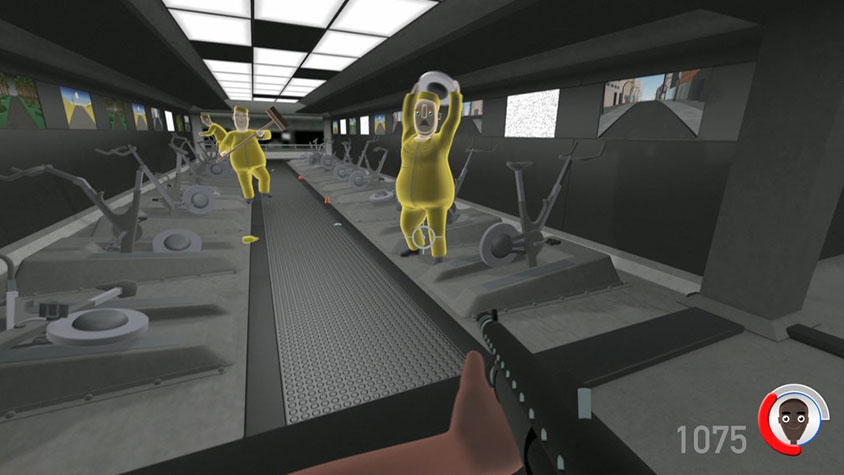
One example was the creation of digital games such as “Snack Attacks,” which needed to feel like a fully realised interactive experience within the world of the show. These systems required both interface design and 3D animation to create believable gameplay visuals that could exist naturally within the narrative.
Another example was the cycling rolling road system, a gamified environment that blended physical activity with digital interaction. This required designing interfaces that communicated performance, progress, and competition in real time, reinforcing the connection between physical effort and digital reward.
Beyond entertainment systems, the project also involved more personal and functional technologies, such as morning call systems and memory layout applications, which visualised personal data and daily routines. These interfaces needed to feel deeply integrated into the characters’ lives, subtly illustrating how technology was shaping behaviour and perception.
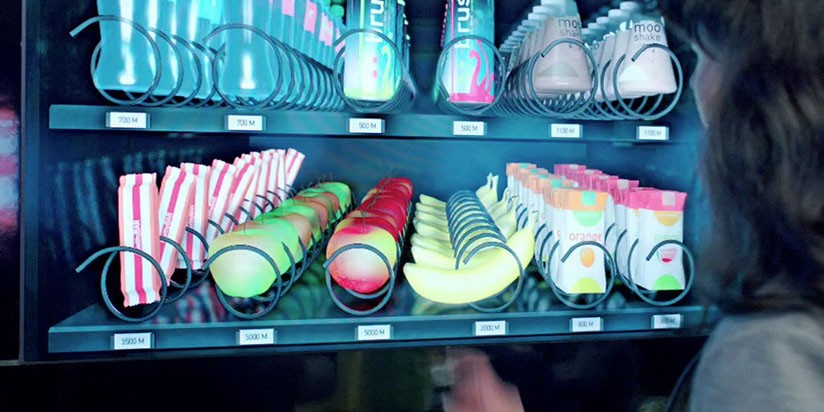
In addition, interactive props such as digital food dispenser machines were designed to function physically on set. These systems needed to work in real time, providing actors with tangible interactions that enhanced the realism of the scenes.
At the start of the project, the challenge was to define a visual language for the film’s technology that felt grounded in real-world science while still supporting the narrative. Unlike highly stylised sci-fi, the interfaces needed to feel functional, utilitarian, and believable as tools used by astronauts and scientists.
The design approach drew inspiration from real-world aerospace systems and scientific equipment, focusing on clarity, hierarchy, and purpose. Interfaces were developed across multiple domains, including navigation systems for vehicles, environmental monitoring, medical diagnostics, and biological analysis of unknown organisms. Each of these required a slightly different visual treatment while still maintaining a cohesive system.
Medical and organism study interfaces, for example, needed to communicate detailed analytical data, often requiring layered information and structured layouts that could represent complex biological processes. In contrast, navigation and control systems prioritised clarity and speed, ensuring that key information could be read instantly.
Beyond design, there was also the practical challenge of preparing these systems for use on set. Unlike post-production UI, these interfaces needed to be displayed live on monitors during filming, meaning that playback systems had to be designed, tested, and integrated into physical environments such as spacecraft interiors and vehicle cockpits.

The most significant phase of the project came from bringing these systems together into a cohesive vision of a near-future world. Each interface was not designed in isolation but as part of a larger ecosystem where technology influenced every aspect of life.
The games and interactive systems needed to feel engaging and immersive, reflecting how entertainment could evolve into more controlled and pervasive experiences. Motion design and 3D animation played a crucial role in making these systems feel alive, responsive, and believable.
The personal applications, such as memory visualisation and daily routine systems, required a different approach. These interfaces needed to feel intimate and seamless, blending into the background of everyday life while subtly revealing the extent of technological control.
The physical machines, such as food dispensers, introduced another layer of complexity. These systems had to function on set, meaning that design decisions needed to account for both visual appearance and practical operation. This required close collaboration with production teams to ensure that the systems worked reliably during filming.
Across all of these elements, the goal was to create interfaces that supported the narrative themes of the show—how technology can both enhance and distort human experience. Each system contributed to this larger story, helping audiences understand the world without explicit explanation.
The most significant phase of the project came from bringing these systems together into a cohesive vision of a near-future world. Each interface was not designed in isolation but as part of a larger ecosystem where technology influenced every aspect of life.
The games and interactive systems needed to feel engaging and immersive, reflecting how entertainment could evolve into more controlled and pervasive experiences. Motion design and 3D animation played a crucial role in making these systems feel alive, responsive, and believable.
The personal applications, such as memory visualisation and daily routine systems, required a different approach. These interfaces needed to feel intimate and seamless, blending into the background of everyday life while subtly revealing the extent of technological control.
The physical machines, such as food dispensers, introduced another layer of complexity. These systems had to function on set, meaning that design decisions needed to account for both visual appearance and practical operation. This required close collaboration with production teams to ensure that the systems worked reliably during filming.
Across all of these elements, the goal was to create interfaces that supported the narrative themes of the show—how technology can both enhance and distort human experience. Each system contributed to this larger story, helping audiences understand the world without explicit explanation.
As the series came together, the integration of these systems played a key role in shaping the visual identity and realism of Black Mirror. The interfaces helped ground the stories, making the speculative elements feel believable and immediate.
The high production value of the series, combined with its strong narrative focus, contributed to its critical success, including BAFTA recognition. The work of the design and production teams supported the vision of the show, helping bring Charlie Brooker’s writing to life through tangible, functional systems.
The success of the series eventually led to its transition to Netflix, where it continued to expand its exploration of technology and society.
For me, the project provided the opportunity to work across multiple types of systems, from interactive games to functional props, while contributing to a broader narrative about the role of technology in everyday life.
As the series came together, the integration of these systems played a key role in shaping the visual identity and realism of Black Mirror. The interfaces helped ground the stories, making the speculative elements feel believable and immediate.
The high production value of the series, combined with its strong narrative focus, contributed to its critical success, including BAFTA recognition. The work of the design and production teams supported the vision of the show, helping bring Charlie Brooker’s writing to life through tangible, functional systems.
The success of the series eventually led to its transition to Netflix, where it continued to expand its exploration of technology and society.
For me, the project provided the opportunity to work across multiple types of systems, from interactive games to functional props, while contributing to a broader narrative about the role of technology in everyday life.
Conclusion
Conclusion
Working on Black Mirror demonstrated how UX and UI design can play a central role in storytelling. By creating believable, functional systems, the project helped translate abstract ideas about technology into concrete experiences that audiences could understand and relate to.
The work required balancing realism with speculation, ensuring that each interface felt like a natural extension of current technology while still pushing into new territory. It also highlighted the importance of integrating design across digital and physical systems, creating experiences that could exist both on screen and within the world of the story.
Ultimately, the project showed how design can shape not just how technology looks, but how it is perceived, understood, and questioned by audiences.
Working on Black Mirror demonstrated how UX and UI design can play a central role in storytelling. By creating believable, functional systems, the project helped translate abstract ideas about technology into concrete experiences that audiences could understand and relate to.
The work required balancing realism with speculation, ensuring that each interface felt like a natural extension of current technology while still pushing into new territory. It also highlighted the importance of integrating design across digital and physical systems, creating experiences that could exist both on screen and within the world of the story.
Ultimately, the project showed how design can shape not just how technology looks, but how it is perceived, understood, and questioned by audiences.
Takeaways
Takeaways
Speculative UX must feel believable.
Near-future systems should feel like natural evolutions of existing technology.Interfaces are central to storytelling.
UI systems help audiences understand complex worlds without explanation.Combining digital and physical systems enhances realism.
Interactive props and working machines create more immersive experiences.3D animation brings systems to life.
Motion and interaction are key to making interfaces feel responsive and real.Strong narratives elevate design impact.
Working within a well-written story amplifies the role of UX and UI in shaping audience perception.
Speculative UX must feel believable.
Near-future systems should feel like natural evolutions of existing technology.Interfaces are central to storytelling.
UI systems help audiences understand complex worlds without explanation.Combining digital and physical systems enhances realism.
Interactive props and working machines create more immersive experiences.3D animation brings systems to life.
Motion and interaction are key to making interfaces feel responsive and real.Strong narratives elevate design impact.
Working within a well-written story amplifies the role of UX and UI in shaping audience perception.
Final
Final
More Work