Dyson Animal
Dyson Animal
Client: Dyson
Agency: Saddington Baynes
Role: Design Director
Teams: Leadership team, 1 PMs, 2 Designers
Duration: 3 months
Goal: UX strategy, manual design
Outcome: Interaction design, 3D experience, prototyping, On screen Interactive Manual + Paper version
Client: Dyson
Agency: Saddington Baynes
Role: Design Director
Teams: Leadership team, 1 PMs, 2 Designers
Duration: 3 months
Goal: UX strategy, manual design
Outcome: Interaction design, 3D experience, prototyping, On screen Interactive Manual + Paper version
Project Introduction
Project Introduction
Product manuals have traditionally been static, text-heavy documents designed to explain how a device works and how it should be maintained. While functional, these formats often struggle to communicate complex mechanical systems clearly, particularly for products that involve multiple components, configurations, or maintenance processes.
While working on paper-based manuals for Dyson products, it became clear that there was an opportunity to rethink how these instructions could be delivered. Dyson products are known for their engineering precision and innovation, yet the manuals themselves did not fully reflect the sophistication of the products they supported.
The project evolved from this observation into a concept for interactive digital manuals, where users could explore products in 3D, understand how components fit together, and receive step-by-step guidance through intuitive visual interactions rather than static diagrams.
My role involved both contributing to the existing manual work and proposing a new direction—one that leveraged digital technology to create a more engaging and effective user experience. This concept was developed into a prototype and presented as a potential future system for Dyson’s flagship products.
Product manuals have traditionally been static, text-heavy documents designed to explain how a device works and how it should be maintained. While functional, these formats often struggle to communicate complex mechanical systems clearly, particularly for products that involve multiple components, configurations, or maintenance processes.
While working on paper-based manuals for Dyson products, it became clear that there was an opportunity to rethink how these instructions could be delivered. Dyson products are known for their engineering precision and innovation, yet the manuals themselves did not fully reflect the sophistication of the products they supported.
The project evolved from this observation into a concept for interactive digital manuals, where users could explore products in 3D, understand how components fit together, and receive step-by-step guidance through intuitive visual interactions rather than static diagrams.
My role involved both contributing to the existing manual work and proposing a new direction—one that leveraged digital technology to create a more engaging and effective user experience. This concept was developed into a prototype and presented as a potential future system for Dyson’s flagship products.
Project Story
Project Story
The initial phase of the project involved working within the constraints of traditional documentation. Paper manuals needed to communicate assembly, usage, and maintenance instructions using static imagery and written explanations. While these manuals were carefully designed, they often required users to interpret complex diagrams and mentally reconstruct how components related to one another.
This limitation became particularly apparent when dealing with products that involved intricate internal systems. Users needed to understand how parts connected, how to disassemble components for maintenance, and how to troubleshoot issues—all from static visuals.
At the same time, digital interfaces were becoming more capable of supporting interactive and visual experiences. Advances in 3D rendering and mobile performance meant that users could potentially explore products in a more intuitive way, rotating, zooming, and interacting with components directly.
The opportunity was to move beyond static documentation and create a system that allowed users to see, explore, and understand products dynamically.
Recognising this, I proposed a shift from traditional manuals toward a digital-first experience that could better align with Dyson’s reputation for innovation and engineering excellence.
The initial phase of the project involved working within the constraints of traditional documentation. Paper manuals needed to communicate assembly, usage, and maintenance instructions using static imagery and written explanations. While these manuals were carefully designed, they often required users to interpret complex diagrams and mentally reconstruct how components related to one another.
This limitation became particularly apparent when dealing with products that involved intricate internal systems. Users needed to understand how parts connected, how to disassemble components for maintenance, and how to troubleshoot issues—all from static visuals.
At the same time, digital interfaces were becoming more capable of supporting interactive and visual experiences. Advances in 3D rendering and mobile performance meant that users could potentially explore products in a more intuitive way, rotating, zooming, and interacting with components directly.
The opportunity was to move beyond static documentation and create a system that allowed users to see, explore, and understand products dynamically.
Recognising this, I proposed a shift from traditional manuals toward a digital-first experience that could better align with Dyson’s reputation for innovation and engineering excellence.
The turning point in the project came when the idea was developed into a working prototype for interactive 3D manuals. This concept reimagined the manual as a digital interface where users could engage directly with a virtual version of the product.
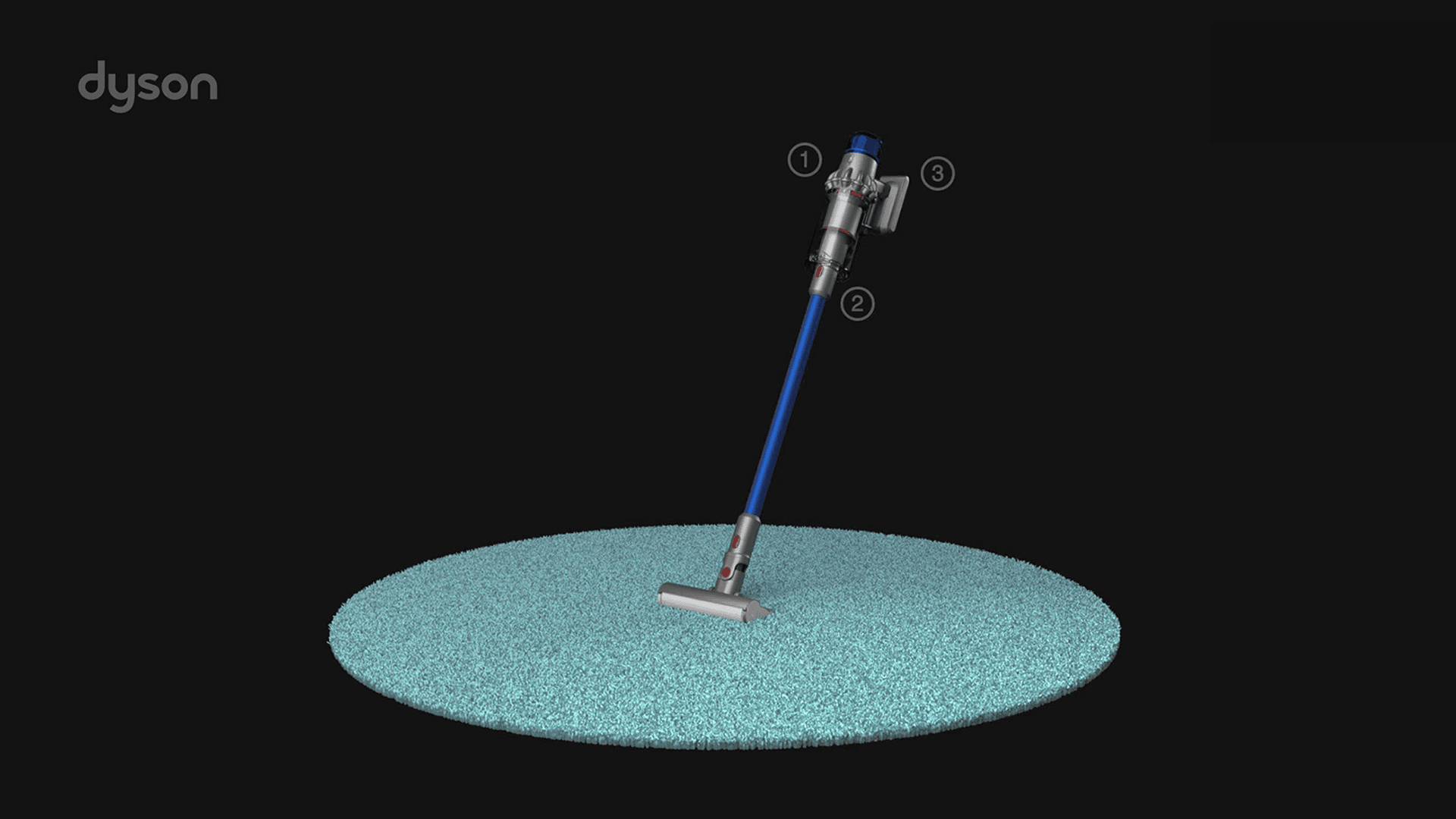
Within the prototype, users could rotate and zoom into a 3D model of the device, explore individual components, and view how parts connected through exploded views. Instead of reading instructions, users could follow guided interactions that visually demonstrated how to assemble, disassemble, or maintain the product.
The system also introduced step-by-step flows that highlighted specific components, showing users exactly where to interact and what actions to take. This reduced the need for interpretation and made complex processes easier to understand.
From a UX perspective, the goal was to reduce cognitive load by replacing abstract diagrams with direct visual interaction. The interface translated engineering complexity into intuitive actions, allowing users to learn by exploring rather than decoding instructions.
The prototype was designed not only as a functional tool but also as a strategic proposal—demonstrating how Dyson could evolve its product experience by integrating digital interaction into the ownership journey.
The turning point in the project came when the idea was developed into a working prototype for interactive 3D manuals. This concept reimagined the manual as a digital interface where users could engage directly with a virtual version of the product.
Within the prototype, users could rotate and zoom into a 3D model of the device, explore individual components, and view how parts connected through exploded views. Instead of reading instructions, users could follow guided interactions that visually demonstrated how to assemble, disassemble, or maintain the product.
The system also introduced step-by-step flows that highlighted specific components, showing users exactly where to interact and what actions to take. This reduced the need for interpretation and made complex processes easier to understand.
From a UX perspective, the goal was to reduce cognitive load by replacing abstract diagrams with direct visual interaction. The interface translated engineering complexity into intuitive actions, allowing users to learn by exploring rather than decoding instructions.
The prototype was designed not only as a functional tool but also as a strategic proposal—demonstrating how Dyson could evolve its product experience by integrating digital interaction into the ownership journey.
Following the development of the prototype, the concept was presented to Dyson as a potential direction for future product manuals, particularly for flagship models where product complexity and user experience are critical.
The proposal highlighted how interactive manuals could improve usability, reduce support queries, and create a more premium ownership experience. By aligning the manual with the sophistication of the product itself, the concept reinforced Dyson’s brand positioning as a leader in engineering and innovation.
While the project began as a refinement of existing documentation, it evolved into a broader vision for how product support and onboarding could be transformed through digital experiences.
The prototype demonstrated that manuals could move beyond static instruction and become interactive systems that actively guide users through understanding and maintaining their products.
Following the development of the prototype, the concept was presented to Dyson as a potential direction for future product manuals, particularly for flagship models where product complexity and user experience are critical.
The proposal highlighted how interactive manuals could improve usability, reduce support queries, and create a more premium ownership experience. By aligning the manual with the sophistication of the product itself, the concept reinforced Dyson’s brand positioning as a leader in engineering and innovation.
While the project began as a refinement of existing documentation, it evolved into a broader vision for how product support and onboarding could be transformed through digital experiences.
The prototype demonstrated that manuals could move beyond static instruction and become interactive systems that actively guide users through understanding and maintaining their products.
Conclusion
Conclusion
The Dyson Digital Manuals concept explored how product documentation could evolve from static instruction into interactive digital experiences. By leveraging 3D visualisation and intuitive interaction design, the project demonstrated a new way of helping users understand complex products.
The work highlighted the role of UX design not only in improving existing systems but also in identifying opportunities for innovation. By proposing and prototyping a new approach, the project helped reframe how product support could be delivered in a more engaging and effective way.
Ultimately, the concept showed how aligning user experience with product sophistication can create more meaningful interactions between users and the products they own.
The Dyson Digital Manuals concept explored how product documentation could evolve from static instruction into interactive digital experiences. By leveraging 3D visualisation and intuitive interaction design, the project demonstrated a new way of helping users understand complex products.
The work highlighted the role of UX design not only in improving existing systems but also in identifying opportunities for innovation. By proposing and prototyping a new approach, the project helped reframe how product support could be delivered in a more engaging and effective way.
Ultimately, the concept showed how aligning user experience with product sophistication can create more meaningful interactions between users and the products they own.
Takeaways
Takeaways
Interactive experiences improve understanding of complex systems.
3D visualisation allows users to explore products in a way that static diagrams cannot.UX can drive strategic innovation, not just execution.
Identifying opportunities and proposing new directions can influence product thinking at a higher level.Reducing cognitive load is key to effective design.
Replacing abstract instructions with direct interaction makes processes easier to understand.Digital tools can enhance post-purchase experiences.
Manuals are part of the product journey and can be reimagined as interactive systems.Prototyping is a powerful communication tool.
Demonstrating ideas through working concepts helps align stakeholders around new possibilities.
Interactive experiences improve understanding of complex systems.
3D visualisation allows users to explore products in a way that static diagrams cannot.UX can drive strategic innovation, not just execution.
Identifying opportunities and proposing new directions can influence product thinking at a higher level.Reducing cognitive load is key to effective design.
Replacing abstract instructions with direct interaction makes processes easier to understand.Digital tools can enhance post-purchase experiences.
Manuals are part of the product journey and can be reimagined as interactive systems.Prototyping is a powerful communication tool.
Demonstrating ideas through working concepts helps align stakeholders around new possibilities.
Final
Final
More Work