Grundfos GO
Grundfos GO
Grundfos GO
Client: Grundfos
Agency: Conjure
Role: Lead Product Designer [UK]
Teams: Europe, America and Asia;Leadership team, 4 PMs, 15 Designers, 22 Engineers
Duration: 6 months
Goal: Create a succesful global application that allows customers to install, register and use grundfos products remotely.
Outcome: Increased revenue of 18% of 4.5B 2023 and increased to 27.5% in 2024
Client: Grundfos
Agency: Conjure
Role: Lead Product Designer [UK]
Teams: Europe, America and Asia;Leadership team, 4 PMs, 15 Designers, 22 Engineers
Duration: 6 months
Goal: Create a succesful global application that allows customers to install, register and use grundfos products remotely.
Outcome: Increased revenue of 18% of 4.5B 2023 and increased to 27.5% in 2024
Project Introduction
Project Introduction
Installing and maintaining industrial and domestic water pumps is a technically demanding task. Engineers working in boiler rooms, plant rooms, and construction environments often rely on a mixture of physical pump interfaces, technical manuals, and specialist tools to configure and diagnose systems. While these tools are powerful, they are fragmented and require significant expertise to use effectively.
The Grundfos GO app was created to simplify this process. Designed as a mobile toolbox for installers and service engineers, the app allows users to configure pumps, run diagnostics, identify replacements, and generate commissioning reports directly from their smartphone.
The vision behind the product was straightforward but ambitious: transform the smartphone into the primary interface for pump installation and servicing.
As aProduct Lead, my role was to shape the strategy for this platform and guide the development of a product that could simplify complex field workflows while supporting the broader digital ecosystem of Grundfos pumps.
The challenge was not simply to build a mobile app. It was to rethink how engineers interact with pumps in the field and remove the friction that had long existed in installation and maintenance workflows.
Installing and maintaining industrial and domestic water pumps is a technically demanding task. Engineers working in boiler rooms, plant rooms, and construction environments often rely on a mixture of physical pump interfaces, technical manuals, and specialist tools to configure and diagnose systems. While these tools are powerful, they are fragmented and require significant expertise to use effectively.
The Grundfos GO app was created to simplify this process. Designed as a mobile toolbox for installers and service engineers, the app allows users to configure pumps, run diagnostics, identify replacements, and generate commissioning reports directly from their smartphone.
The vision behind the product was straightforward but ambitious: transform the smartphone into the primary interface for pump installation and servicing.
As aProduct Lead, my role was to shape the strategy for this platform and guide the development of a product that could simplify complex field workflows while supporting the broader digital ecosystem of Grundfos pumps.
The challenge was not simply to build a mobile app. It was to rethink how engineers interact with pumps in the field and remove the friction that had long existed in installation and maintenance workflows.
Project Story
Project Story
Through research with installers and service engineers, a consistent pattern emerged. While pumps themselves had become increasingly advanced, the tools used to configure and maintain them had not kept pace with the realities of modern field work.
Engineers frequently moved between multiple sources of information: physical pump interfaces, printed manuals, diagnostic tools, and support documentation. Configuring a pump could involve manually setting parameters such as pressure curves, operating modes, or flow rates, often requiring specialist knowledge developed through years of experience.
Troubleshooting added another layer of complexity. When a system failed, engineers needed to interpret error codes, retrieve system logs, and cross-reference documentation to understand the root cause. In many cases this led to additional site visits, delays for customers, and increased operational costs.
The opportunity became clear. If these workflows could be centralised into a single, intuitive digital interface, engineers could work faster, diagnose problems more effectively, and reduce the cognitive burden of complex installations.
The smartphone, already present in every engineer’s pocket, offered the perfect platform for this transformation.
Through research with installers and service engineers, a consistent pattern emerged. While pumps themselves had become increasingly advanced, the tools used to configure and maintain them had not kept pace with the realities of modern field work.
Engineers frequently moved between multiple sources of information: physical pump interfaces, printed manuals, diagnostic tools, and support documentation. Configuring a pump could involve manually setting parameters such as pressure curves, operating modes, or flow rates, often requiring specialist knowledge developed through years of experience.
Troubleshooting added another layer of complexity. When a system failed, engineers needed to interpret error codes, retrieve system logs, and cross-reference documentation to understand the root cause. In many cases this led to additional site visits, delays for customers, and increased operational costs.
The opportunity became clear. If these workflows could be centralised into a single, intuitive digital interface, engineers could work faster, diagnose problems more effectively, and reduce the cognitive burden of complex installations.
The smartphone, already present in every engineer’s pocket, offered the perfect platform for this transformation.
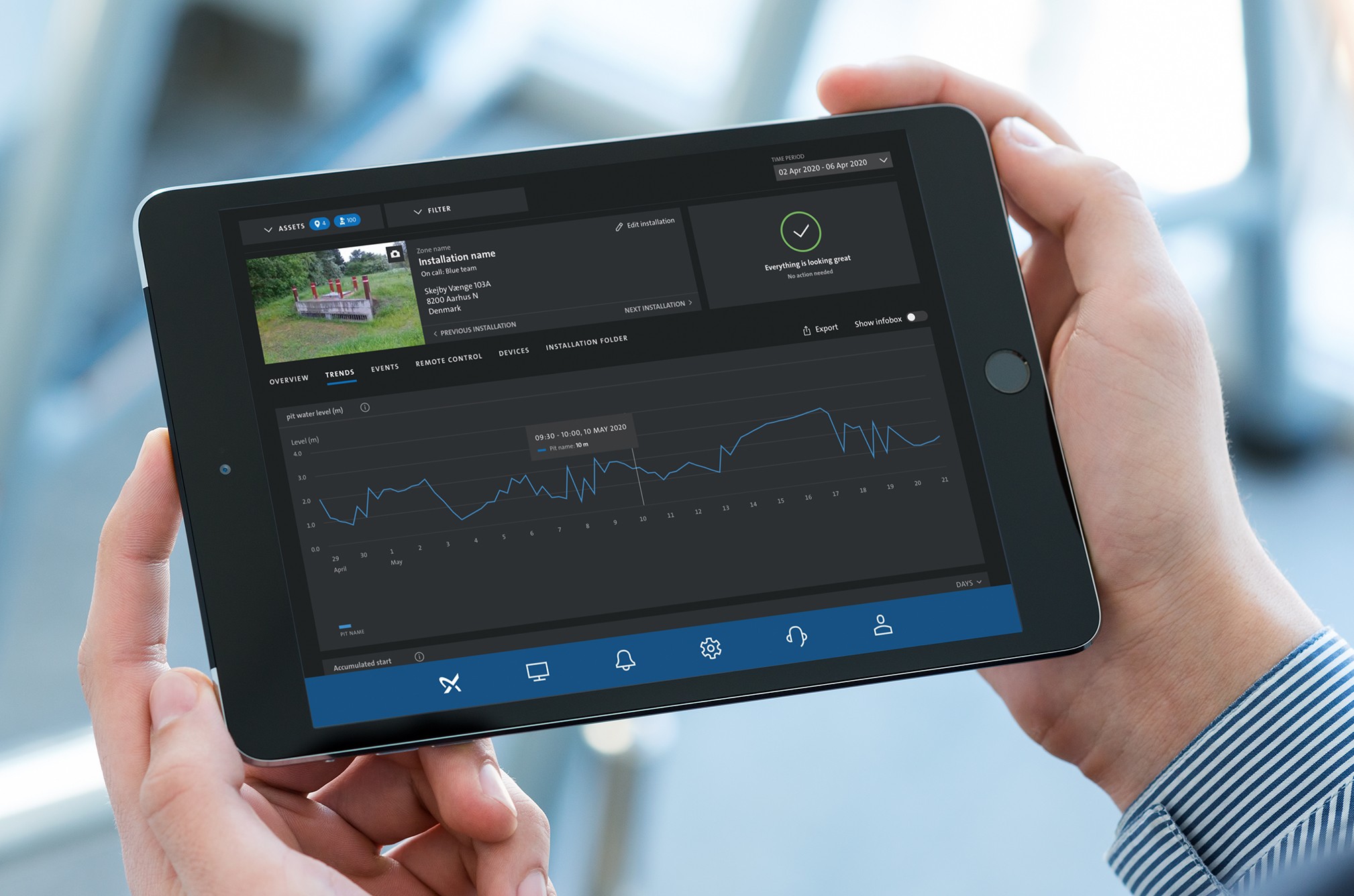
The turning point in the project came when the team shifted its perspective from building a mobile interface for pumps to creating a digital assistant for installers.
Rather than exposing complex technical parameters, the app would guide engineers through the installation and diagnostic process step by step. This shift fundamentally changed how the product was designed.
Guided commissioning became a core feature. Instead of manually configuring pumps, installers could answer a series of simple questions about the heating system—such as the number of radiators or the layout of the circuit—and the app would recommend optimal pump settings.
The app also introduced real-time diagnostics, allowing engineers to connect directly to pumps and view performance data such as flow, temperature, and system alarms. This immediate visibility made it far easier to identify issues without needing additional tools.
Another key innovation was the pump replacement tool. Installers could quickly identify compatible replacement pumps and configure them through the same mobile interface, dramatically reducing the time required to complete common service tasks.
Perhaps the most transformative feature was automated documentation. After commissioning or servicing a system, the app could generate digital reports containing configuration settings and performance data. What once required manual paperwork could now be completed instantly.
Ineffect, the produc transformed the smartphone into a complete field-service toolkit.
The turning point in the project came when the team shifted its perspective from building a mobile interface for pumps to creating a digital assistant for installers.
Rather than exposing complex technical parameters, the app would guide engineers through the installation and diagnostic process step by step. This shift fundamentally changed how the product was designed.
Guided commissioning became a core feature. Instead of manually configuring pumps, installers could answer a series of simple questions about the heating system—such as the number of radiators or the layout of the circuit—and the app would recommend optimal pump settings.
The app also introduced real-time diagnostics, allowing engineers to connect directly to pumps and view performance data such as flow, temperature, and system alarms. This immediate visibility made it far easier to identify issues without needing additional tools.
Another key innovation was the pump replacement tool. Installers could quickly identify compatible replacement pumps and configure them through the same mobile interface, dramatically reducing the time required to complete common service tasks.
Perhaps the most transformative feature was automated documentation. After commissioning or servicing a system, the app could generate digital reports containing configuration settings and performance data. What once required manual paperwork could now be completed instantly.
Ineffect, the produc transformed the smartphone into a complete field-service toolkit.

As the product matured and adoption increased, the impact on field workflows became clear.
Installers could commission pumps significantly faster using guided workflows, reducing the time required for installation and setup. Real-time diagnostics improved first-time fix rates, enabling engineers to identify and resolve problems during the initial service visit.
The pump replacement feature simplified a particularly common task in heating system maintenance. With the ability to identify compatible replacements quickly, installers could cover a large proportion of pump replacements without carrying an extensive range of parts.
The app also became a key component of Grundfos’ broader digital ecosystem. By connecting pumps, installers, and diagnostic data through a single platform, the product laid the foundation for more advanced services and connected infrastructure.
Adoption grew steadily, with the app reaching over one hundred thousand installations on Android devices alone and widespread usage among professional installers.
What began as a tool to simplify pump configuration had evolved into a central digital platform for field engineers.
As the product matured and adoption increased, the impact on field workflows became clear.
Installers could commission pumps significantly faster using guided workflows, reducing the time required for installation and setup. Real-time diagnostics improved first-time fix rates, enabling engineers to identify and resolve problems during the initial service visit.
The pump replacement feature simplified a particularly common task in heating system maintenance. With the ability to identify compatible replacements quickly, installers could cover a large proportion of pump replacements without carrying an extensive range of parts.
The app also became a key component of Grundfos’ broader digital ecosystem. By connecting pumps, installers, and diagnostic data through a single platform, the product laid the foundation for more advanced services and connected infrastructure.
Adoption grew steadily, with the app reaching over one hundred thousand installations on Android devices alone and widespread usage among professional installers.
What began as a tool to simplify pump configuration had evolved into a central digital platform for field engineers.
Conclusion
Conclusion
The Grundfos GO app represents a shift in how complex industrial equipment can be serviced and maintained. By translating technical workflows into intuitive mobile experiences, the product reduces the barriers that traditionally limited pump configuration and diagnostics to highly specialised expertise.
For installers, the result is a faster and more reliable workflow. For customers, it means quicker installations and fewer service disruptions. For Grundfos, it establishes a digital platform that connects products, installers, and operational data.
Most importantly, the project demonstrates how thoughtful product design can transform established industrial processes. By focusing on the realities of field work and designing tools that align with how engineers actually operate, the app succeeded in simplifying one of the most complex aspects of pump installation and maintenance.
The Grundfos GO app represents a shift in how complex industrial equipment can be serviced and maintained. By translating technical workflows into intuitive mobile experiences, the product reduces the barriers that traditionally limited pump configuration and diagnostics to highly specialised expertise.
For installers, the result is a faster and more reliable workflow. For customers, it means quicker installations and fewer service disruptions. For Grundfos, it establishes a digital platform that connects products, installers, and operational data.
Most importantly, the project demonstrates how thoughtful product design can transform established industrial processes. By focusing on the realities of field work and designing tools that align with how engineers actually operate, the app succeeded in simplifying one of the most complex aspects of pump installation and maintenance.
Takeaways
Takeaways
The Grundfos GO app represents a shift in how complex industrial equipment can be serviced and maintained. By translating technical workflows into intuitive mobile experiences, the product reduces the barriers that traditionally limited pump configuration and diagnostics to highly specialised expertise.
For installers, the result is a faster and more reliable workflow. For customers, it means quicker installations and fewer service disruptions. For Grundfos, it establishes a digital platform that connects products, installers, and operational data.
Most importantly, the project demonstrates how thoughtful product design can transform established industrial processes. By focusing on the realities of field work and designing tools that align with how engineers actually operate, the app succeeded in simplifying one of the most complex aspects of pump installation and maintenance.
The Grundfos GO app represents a shift in how complex industrial equipment can be serviced and maintained. By translating technical workflows into intuitive mobile experiences, the product reduces the barriers that traditionally limited pump configuration and diagnostics to highly specialised expertise.
For installers, the result is a faster and more reliable workflow. For customers, it means quicker installations and fewer service disruptions. For Grundfos, it establishes a digital platform that connects products, installers, and operational data.
Most importantly, the project demonstrates how thoughtful product design can transform established industrial processes. By focusing on the realities of field work and designing tools that align with how engineers actually operate, the app succeeded in simplifying one of the most complex aspects of pump installation and maintenance.
More Work