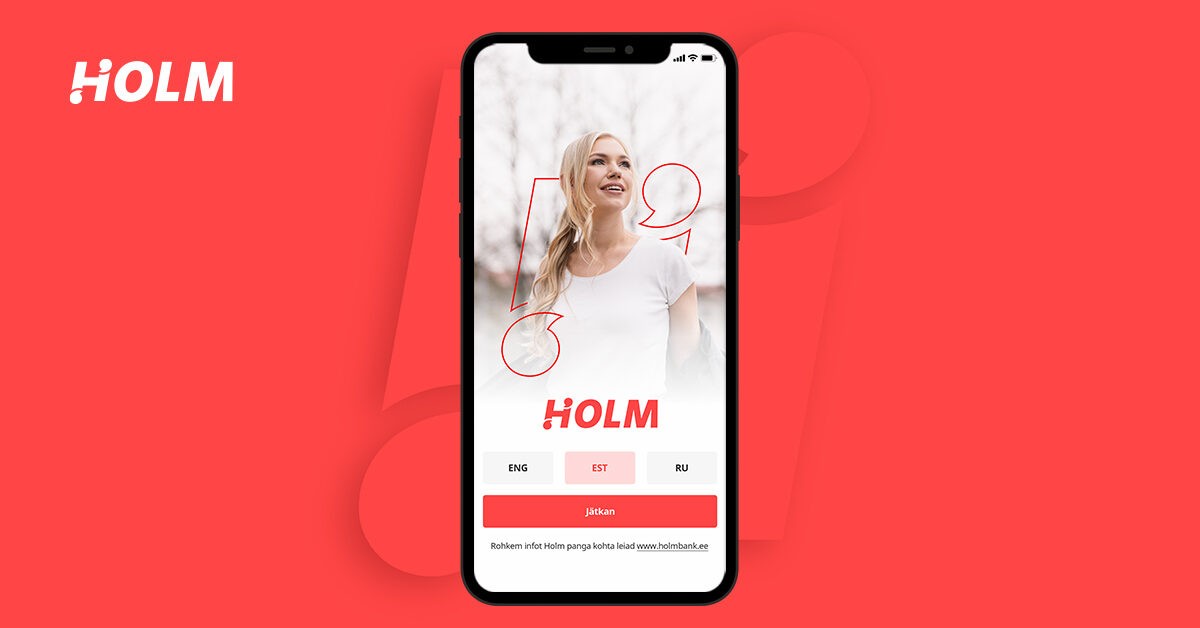
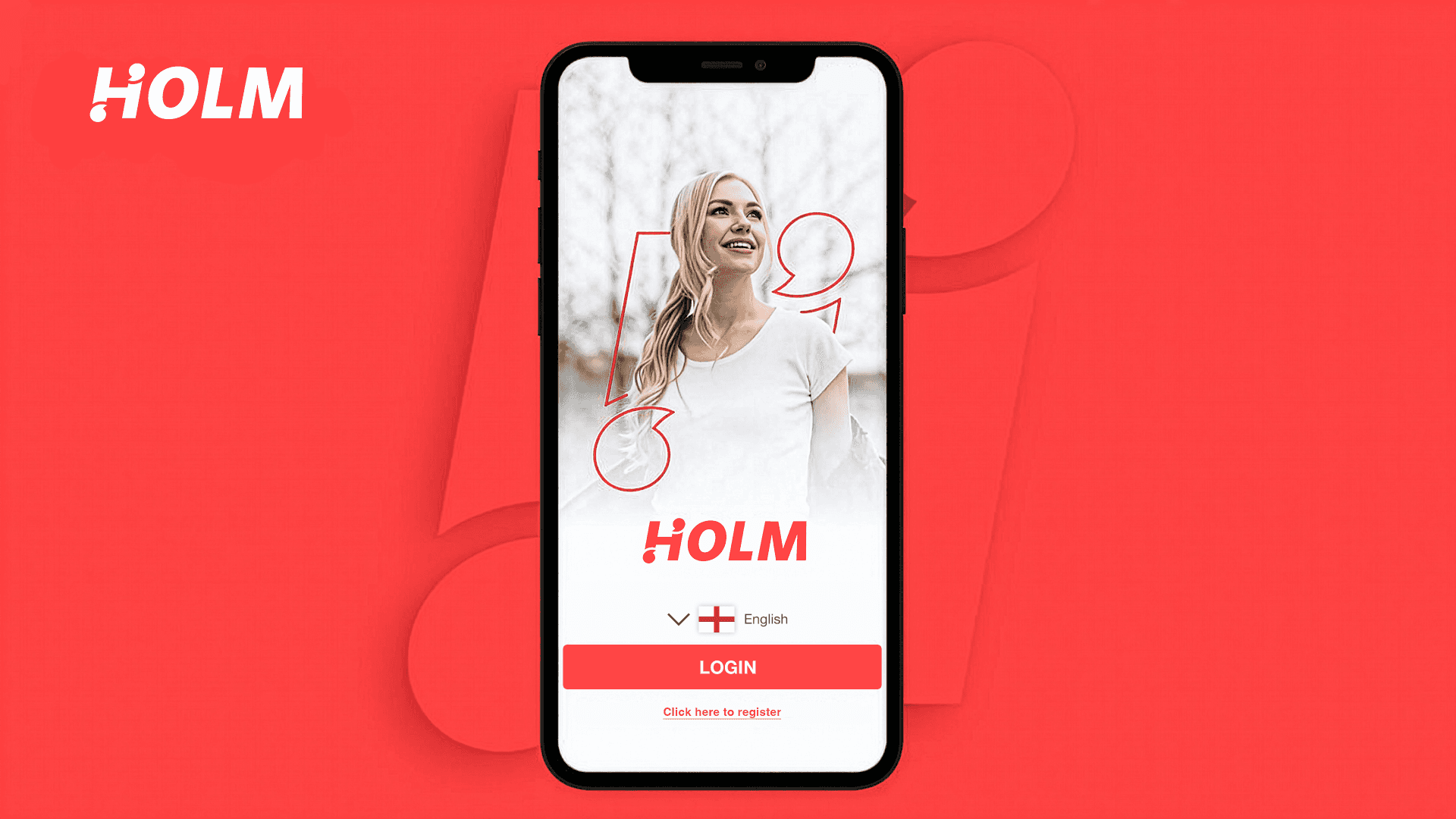
Holm Banking
Holm Banking
Client: Holm Banking
Agency: Conjure
Role: Lead UX Designer
Teams: Leadership team, 2 PMs, 3 Designers
Duration: 3 months
Goal: Interface concepts, visual systems, motion design, editing
Outcome: Successful Banking application launch
Client: Holm Banking
Agency: Conjure
Role: Lead UX Designer
Teams: Leadership team, 2 PMs, 3 Designers
Duration: 3 months
Goal: Interface concepts, visual systems, motion design, editing
Outcome: Successful Banking application launch
Project Introduction
Project Introduction
Designing banking applications presents a unique challenge: they must feel simple and elegant for users while operating within highly complex frameworks of identity verification, compliance, and security. Unlike many digital products, banking apps do not have the luxury of frictionless simplicity alone—every user journey must balance accessibility with trust, flexibility with regulation and usability with protection.
As Lead UX/UI Designer on the Holm Banking App, my role was to lead the experience strategy for a product that needed to accommodate multiple user types, varied onboarding requirements and different layers of security access. The project was not simply about designing a mobile banking interface, it was about creating a framework capable of supporting diverse customer journeys while ensuring the product remained intuitive and visually refined.
The central challenge was complexity. Different customers required different onboarding routes depending on identity verification, security methods and access preferences. Some users needed faster pathways, while others required more rigorous verification systems. The app needed to support all of these possibilities without becoming confusing or fragmented.
Before the product could become visually sophisticated, the experience architecture had to be solved first.
Designing banking applications presents a unique challenge: they must feel simple and elegant for users while operating within highly complex frameworks of identity verification, compliance, and security. Unlike many digital products, banking apps do not have the luxury of frictionless simplicity alone—every user journey must balance accessibility with trust, flexibility with regulation and usability with protection.
As Lead UX/UI Designer on the Holm Banking App, my role was to lead the experience strategy for a product that needed to accommodate multiple user types, varied onboarding requirements and different layers of security access. The project was not simply about designing a mobile banking interface, it was about creating a framework capable of supporting diverse customer journeys while ensuring the product remained intuitive and visually refined.
The central challenge was complexity. Different customers required different onboarding routes depending on identity verification, security methods and access preferences. Some users needed faster pathways, while others required more rigorous verification systems. The app needed to support all of these possibilities without becoming confusing or fragmented.
Before the product could become visually sophisticated, the experience architecture had to be solved first.
Project Story
Project Story
At the start of the project, the biggest challenge was not aesthetics—it was systems architecture. Banking apps involve far more than account views and payment screens; they require robust onboarding pathways that can adapt to different regulatory and user scenarios.
Holm needed to support multiple onboarding routes, meaning users could not be treated as a single standard journey. Depending on customer profile, identity requirements, and regional or security needs, onboarding paths could differ significantly. This introduced immediate UX complexity, as the system had to remain coherent even when users entered through different routes.
In parallel, security systems introduced another major layer of complexity. The app needed to support multiple forms of authentication and protection, accommodating different user preferences and operational requirements. This meant designing flows that could support varying combinations of verification without creating friction or confusion.
The challenge was to create an architecture that could flex based on user needs while still feeling unified. If not handled carefully, the app risked becoming a disconnected collection of processes rather than a cohesive product.
This made wireframing the most critical phase of the project. Before visual design could begin, the product needed a deeply considered structural foundation.
At the start of the project, the biggest challenge was not aesthetics—it was systems architecture. Banking apps involve far more than account views and payment screens; they require robust onboarding pathways that can adapt to different regulatory and user scenarios.
Holm needed to support multiple onboarding routes, meaning users could not be treated as a single standard journey. Depending on customer profile, identity requirements, and regional or security needs, onboarding paths could differ significantly. This introduced immediate UX complexity, as the system had to remain coherent even when users entered through different routes.
In parallel, security systems introduced another major layer of complexity. The app needed to support multiple forms of authentication and protection, accommodating different user preferences and operational requirements. This meant designing flows that could support varying combinations of verification without creating friction or confusion.
The challenge was to create an architecture that could flex based on user needs while still feeling unified. If not handled carefully, the app risked becoming a disconnected collection of processes rather than a cohesive product.
This made wireframing the most critical phase of the project. Before visual design could begin, the product needed a deeply considered structural foundation.
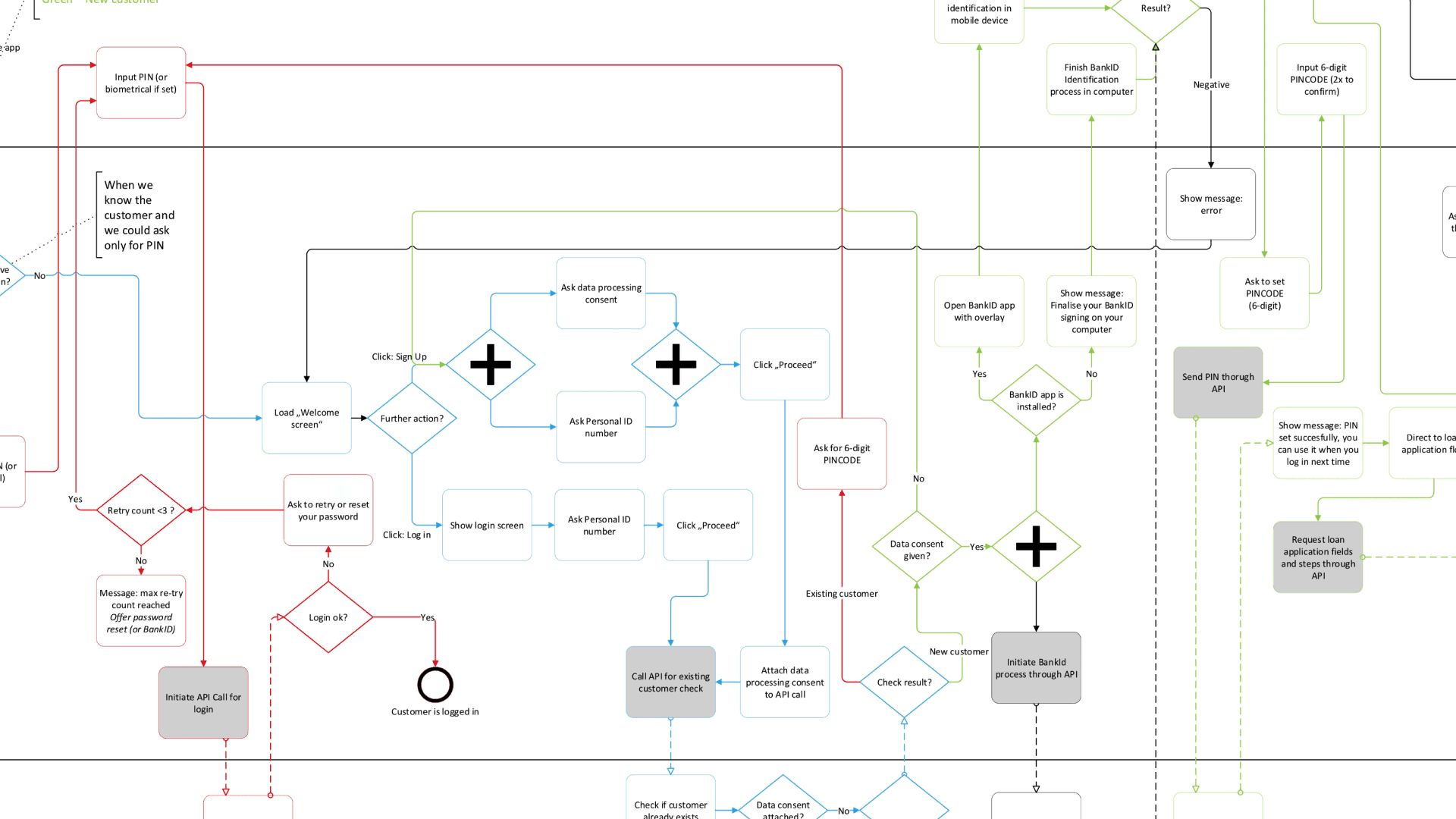
The turning point in the project came during the wireframing and systems design phase, where the challenge shifted from identifying complexity to structuring it into a scalable product experience.
Rather than designing isolated screens, I led the development of a flexible experience framework that mapped out multiple onboarding journeys and security pathways while maintaining consistency across the product. This meant identifying where flows diverged, where they converged, and how users could move through different levels of verification without losing clarity.
The wireframes became the strategic blueprint for the app. By solving the structural complexity early, the product gained a foundation capable of supporting different user scenarios while preserving usability.
This framework also created alignment across teams. Once onboarding, authentication, and security logic were clearly defined, the project could move confidently into UI execution.
With the core architecture validated, the focus expanded into designing the full visual system. At this stage, the challenge shifted from structure to refinement—transforming functional wireframes into polished, trustworthy, and visually engaging banking experiences.
Layouts were crafted to ensure that security-heavy processes still felt elegant, while transactional and account-management features remained accessible and clear. The result was an experience where complexity was largely invisible to the user, hidden behind thoughtful UX strategy and strong structural design.
The turning point in the project came during the wireframing and systems design phase, where the challenge shifted from identifying complexity to structuring it into a scalable product experience.
Rather than designing isolated screens, I led the development of a flexible experience framework that mapped out multiple onboarding journeys and security pathways while maintaining consistency across the product. This meant identifying where flows diverged, where they converged, and how users could move through different levels of verification without losing clarity.
The wireframes became the strategic blueprint for the app. By solving the structural complexity early, the product gained a foundation capable of supporting different user scenarios while preserving usability.
This framework also created alignment across teams. Once onboarding, authentication, and security logic were clearly defined, the project could move confidently into UI execution.
With the core architecture validated, the focus expanded into designing the full visual system. At this stage, the challenge shifted from structure to refinement—transforming functional wireframes into polished, trustworthy, and visually engaging banking experiences.
Layouts were crafted to ensure that security-heavy processes still felt elegant, while transactional and account-management features remained accessible and clear. The result was an experience where complexity was largely invisible to the user, hidden behind thoughtful UX strategy and strong structural design.
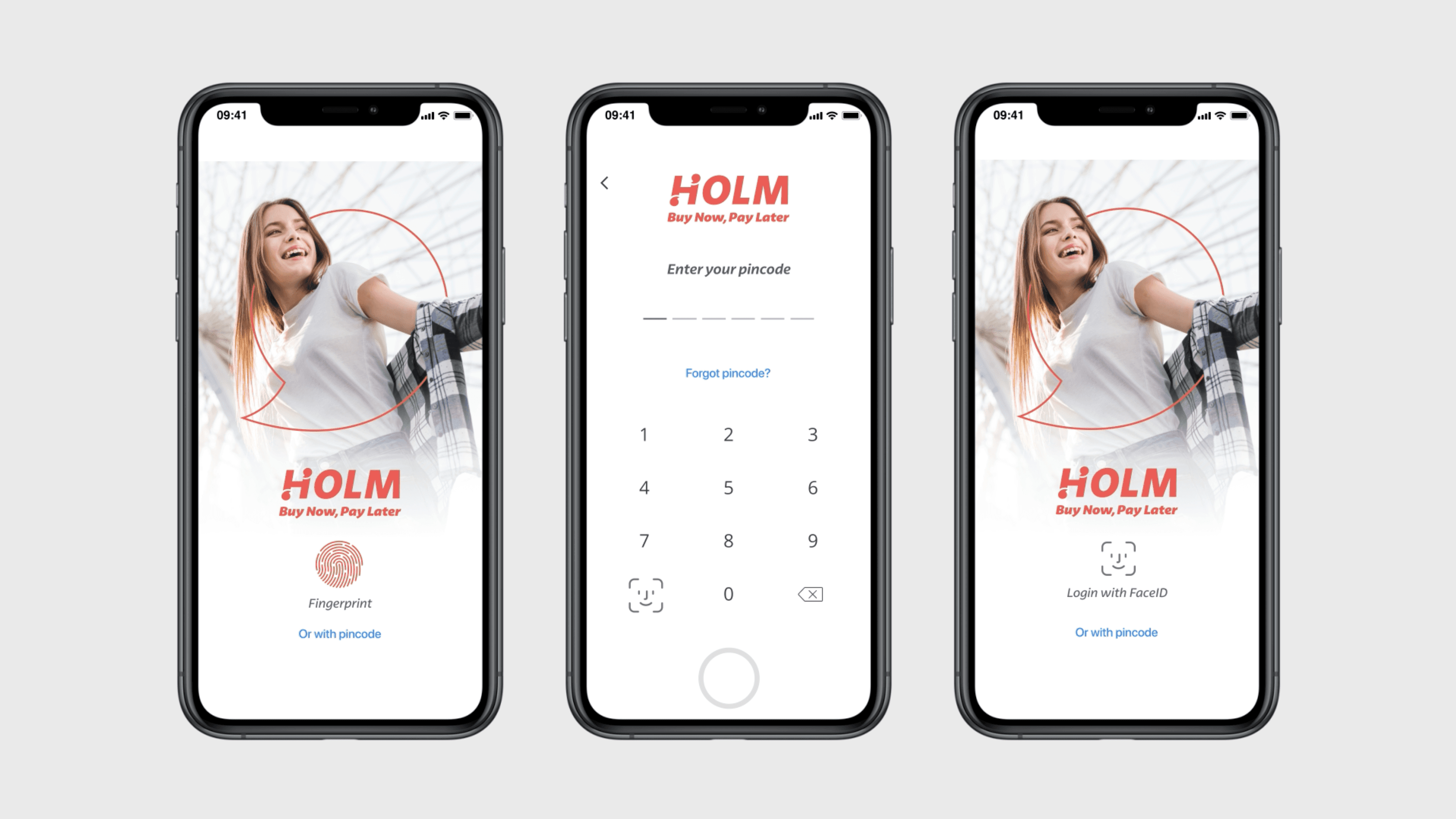
As the app design matured, the benefits of solving the UX architecture early became increasingly clear. Because onboarding and security systems had already been mapped comprehensively, the visual design process became significantly more efficient.
Instead of repeatedly redesigning structural logic, teams could focus on crafting high-quality layouts and interactions. This accelerated progress while ensuring consistency across all user journeys.
The design system was able to support a broad range of experiences—from first-time onboarding to repeat secure access—without losing visual cohesion. Users were presented with flows that felt tailored to their needs, even though those journeys were powered by a much more complex backend structure.
By solving for flexibility first and beauty second, the project was able to create an app that balanced trust, security, and sophistication.
As the app design matured, the benefits of solving the UX architecture early became increasingly clear. Because onboarding and security systems had already been mapped comprehensively, the visual design process became significantly more efficient.
Instead of repeatedly redesigning structural logic, teams could focus on crafting high-quality layouts and interactions. This accelerated progress while ensuring consistency across all user journeys.
The design system was able to support a broad range of experiences—from first-time onboarding to repeat secure access—without losing visual cohesion. Users were presented with flows that felt tailored to their needs, even though those journeys were powered by a much more complex backend structure.
By solving for flexibility first and beauty second, the project was able to create an app that balanced trust, security, and sophistication.
Conclusion
Conclusion
The Holm Banking App demonstrated that in fintech, strong design begins with solving complexity—not decorating it. By leading the strategic UX architecture for onboarding and security, the project established a scalable framework that could support multiple user journeys while remaining intuitive.
The success of the product was rooted in the wireframing phase, where complexity was structured into clarity. Once that foundation was in place, visual design could elevate the experience into something both functional and beautiful.
The project reinforced the importance of systems thinking in product leadership, showing that effective banking experiences are built not simply through interface design, but through careful orchestration of trust, compliance, flexibility, and user clarity.
The Holm Banking App demonstrated that in fintech, strong design begins with solving complexity—not decorating it. By leading the strategic UX architecture for onboarding and security, the project established a scalable framework that could support multiple user journeys while remaining intuitive.
The success of the product was rooted in the wireframing phase, where complexity was structured into clarity. Once that foundation was in place, visual design could elevate the experience into something both functional and beautiful.
The project reinforced the importance of systems thinking in product leadership, showing that effective banking experiences are built not simply through interface design, but through careful orchestration of trust, compliance, flexibility, and user clarity.

Takeaways
Takeaways
Complex products require structural clarity first.
Solving architecture early prevents downstream friction and redesign.Multiple user journeys must still feel unified.
Flexible onboarding and security systems need cohesive UX frameworks.Wireframing is strategic, not just preparatory.
In complex systems, wireframes define product logic and scalability.Security should feel seamless, not burdensome.
Strong UX can make sophisticated protection feel intuitive.Beauty works best on top of strong systems.
Elegant UI becomes far more effective when built on validated product architecture.
Complex products require structural clarity first.
Solving architecture early prevents downstream friction and redesign.Multiple user journeys must still feel unified.
Flexible onboarding and security systems need cohesive UX frameworks.Wireframing is strategic, not just preparatory.
In complex systems, wireframes define product logic and scalability.Security should feel seamless, not burdensome.
Strong UX can make sophisticated protection feel intuitive.Beauty works best on top of strong systems.
Elegant UI becomes far more effective when built on validated product architecture.
Prototype
Prototype
More Work