Killzone 2
Killzone 2
Client: Sony Playstation / Axis Animation
Agency: Sony Playstation
Role: Lead Motion Designer
Teams: Leadership team, 3 Designers
Duration: 12 months
Goal: Broadcast UI, logo systems, cinematic graphics, world-building
Outcome: Successfully implemented news interfaces, logos, splash screens, and cinematic motion graphics
Client: Sony Playstation / Axis Animation
Agency: Sony Playstation
Role: Lead Motion Designer
Teams: Leadership team, 3 Designers
Duration: 12 months
Goal: Broadcast UI, logo systems, cinematic graphics, world-building
Outcome: Successfully implemented news interfaces, logos, splash screens, and cinematic motion graphics
Project Introduction
Project Introduction
In narrative-driven games, visual design extends far beyond gameplay interfaces. It plays a critical role in building the world itself, shaping how players understand factions, environments and the broader context of the story. In Killzone 2, the world is defined by a dystopian, militarised future where propaganda, control and conflict are central themes.
My role on the project involved designing a range of visual systems that contributed to this world-building, including futuristic news screens, logo systems, splash screens, and cinematic motion graphics. These elements were used throughout the game to communicate narrative context, reinforce the identity of factions and create a believable media ecosystem within the game world.
The challenge was to design systems that felt authentic to a fictional future while supporting the tone of the game-gritty, controlled, and militaristic—ensuring that every visual element reinforced the atmosphere of the world.
Designing interfaces for film often involves balancing realism, storytelling, and technical execution, but stepping into a leadership role introduces an additional layer of responsibility—ensuring that design not only looks correct on screen but functions within the physical realities of a film set. On The Last Days on Mars, I took on my first role leading the design and implementation of on-screen graphics, creating UI systems for vehicles, space station environments, and scientific monitoring systems.
The film’s setting required a believable vision of near-future space exploration technology. Interfaces needed to reflect systems used for navigation, diagnostics, medical analysis, and the study of unknown organisms, all while aligning with the grounded, realistic tone of the film. My role involved not only designing these systems but also ensuring they were physically present and functional during filming through playback systems integrated into the sets.
This was an opportunity to move beyond purely digital design and work directly within the production environment, collaborating with set designers and technical crews to bring the interfaces into the physical world.
Project Story
Project Story
At the start of the project, the key challenge was defining how information would be communicated within the world of Killzone 2. The game required a range of visual systems that extended beyond traditional HUD elements, including broadcast-style news interfaces that reflected how information and propaganda might be delivered in a controlled, authoritarian society.
These news systems needed to feel credible and structured, drawing inspiration from real-world broadcast formats while adapting them to a futuristic, militarised context. Typography, layout, and motion all needed to convey authority and control, reinforcing the tone of the game.
Alongside this, the project involved creating logo systems and splash screens that defined the identity of different factions and environments within the game. These designs needed to be bold, recognisable, and consistent with the visual language of the world, helping players quickly understand who they were interacting with and what each entity represented.
The work also extended into cinematic motion graphics and VFX, where visual elements were designed to support in-game storytelling. These systems needed to integrate seamlessly into cinematic sequences, requiring a strong understanding of timing, composition, and how motion could guide player attention.
As the scope of the work expanded, it became clear that these elements were not isolated—they were part of a larger visual ecosystem that needed to feel cohesive and believable.
At the start of the project, the challenge was to define a visual language for the film’s technology that felt grounded in real-world science while still supporting the narrative. Unlike highly stylised sci-fi, the interfaces needed to feel functional, utilitarian, and believable as tools used by astronauts and scientists.
The design approach drew inspiration from real-world aerospace systems and scientific equipment, focusing on clarity, hierarchy, and purpose. Interfaces were developed across multiple domains, including navigation systems for vehicles, environmental monitoring, medical diagnostics, and biological analysis of unknown organisms. Each of these required a slightly different visual treatment while still maintaining a cohesive system.
Medical and organism study interfaces, for example, needed to communicate detailed analytical data, often requiring layered information and structured layouts that could represent complex biological processes. In contrast, navigation and control systems prioritised clarity and speed, ensuring that key information could be read instantly.
Beyond design, there was also the practical challenge of preparing these systems for use on set. Unlike post-production UI, these interfaces needed to be displayed live on monitors during filming, meaning that playback systems had to be designed, tested, and integrated into physical environments such as spacecraft interiors and vehicle cockpits.
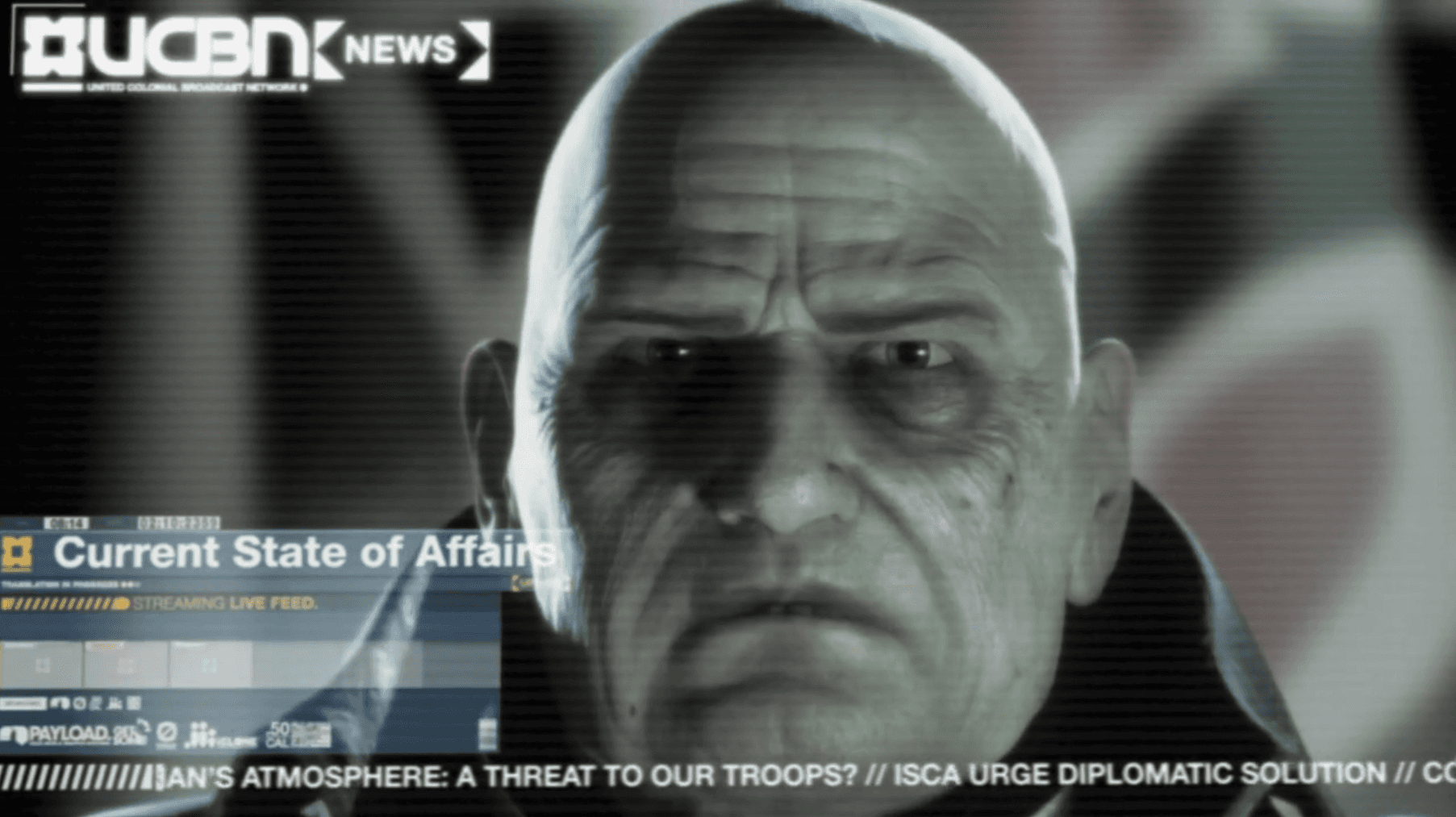
The turning point in the project came when these elements were brought together to create a fully realised media and communication layer within the game world. The news systems, logos, and motion graphics combined to form a cohesive visual language that reinforced the narrative themes of control, conflict, and propaganda.
The news broadcast interfaces became a key storytelling tool, presenting information in a way that felt both familiar and unsettling. Motion design played a crucial role here, using transitions, overlays, and timing to simulate real broadcast behaviour while maintaining the game’s unique aesthetic.
The logo and branding systems provided a strong visual foundation for the world, giving each faction a clear identity. These elements needed to work across multiple contexts—from static screens to animated sequences—ensuring consistency throughout the experience.
The cinematic motion graphics and VFX added another layer of depth, supporting key narrative moments and enhancing the overall immersion. Designing these elements required close attention to pacing and visual hierarchy, ensuring that information was communicated effectively within the context of fast-moving scenes.
Through this process, the work evolved from individual assets into a unified system that contributed directly to the storytelling and atmosphere of the game.
The turning point in the project came when these elements were brought together to create a fully realised media and communication layer within the game world. The news systems, logos, and motion graphics combined to form a cohesive visual language that reinforced the narrative themes of control, conflict, and propaganda.
The news broadcast interfaces became a key storytelling tool, presenting information in a way that felt both familiar and unsettling. Motion design played a crucial role here, using transitions, overlays, and timing to simulate real broadcast behaviour while maintaining the game’s unique aesthetic.
The logo and branding systems provided a strong visual foundation for the world, giving each faction a clear identity. These elements needed to work across multiple contexts—from static screens to animated sequences—ensuring consistency throughout the experience.
The cinematic motion graphics and VFX added another layer of depth, supporting key narrative moments and enhancing the overall immersion. Designing these elements required close attention to pacing and visual hierarchy, ensuring that information was communicated effectively within the context of fast-moving scenes.
Through this process, the work evolved from individual assets into a unified system that contributed directly to the storytelling and atmosphere of the game.
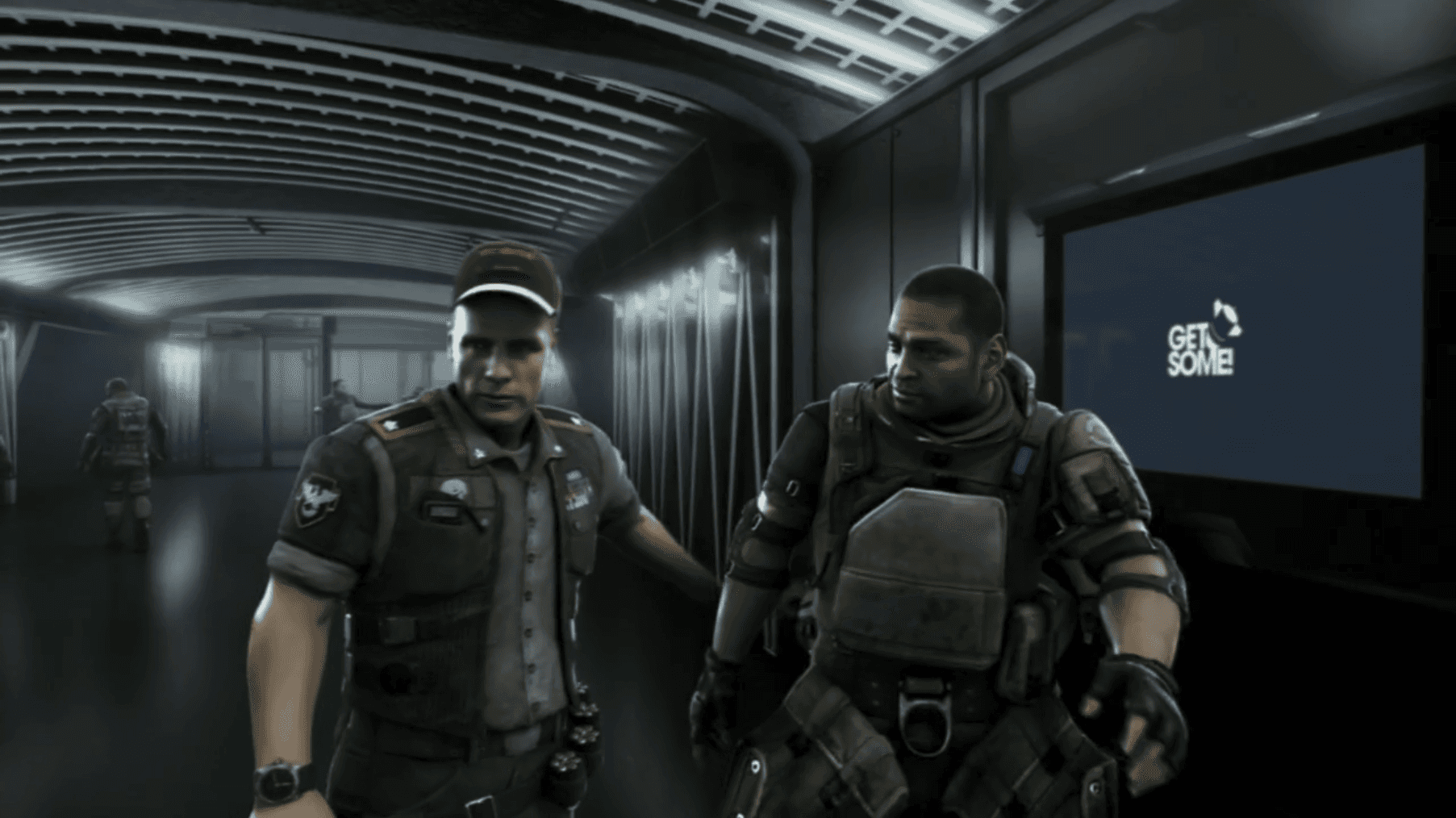
As the project moved toward completion, the integration of these visual systems helped define the overall tone and immersion of Killzone 2. The broadcast interfaces, branding, and motion graphics worked together to create a believable world where every piece of information felt controlled and intentional.
The designs supported both gameplay and narrative, providing context without interrupting the player experience. By embedding these systems into the world, the game was able to communicate its themes more effectively, allowing players to engage with the story on a deeper level.
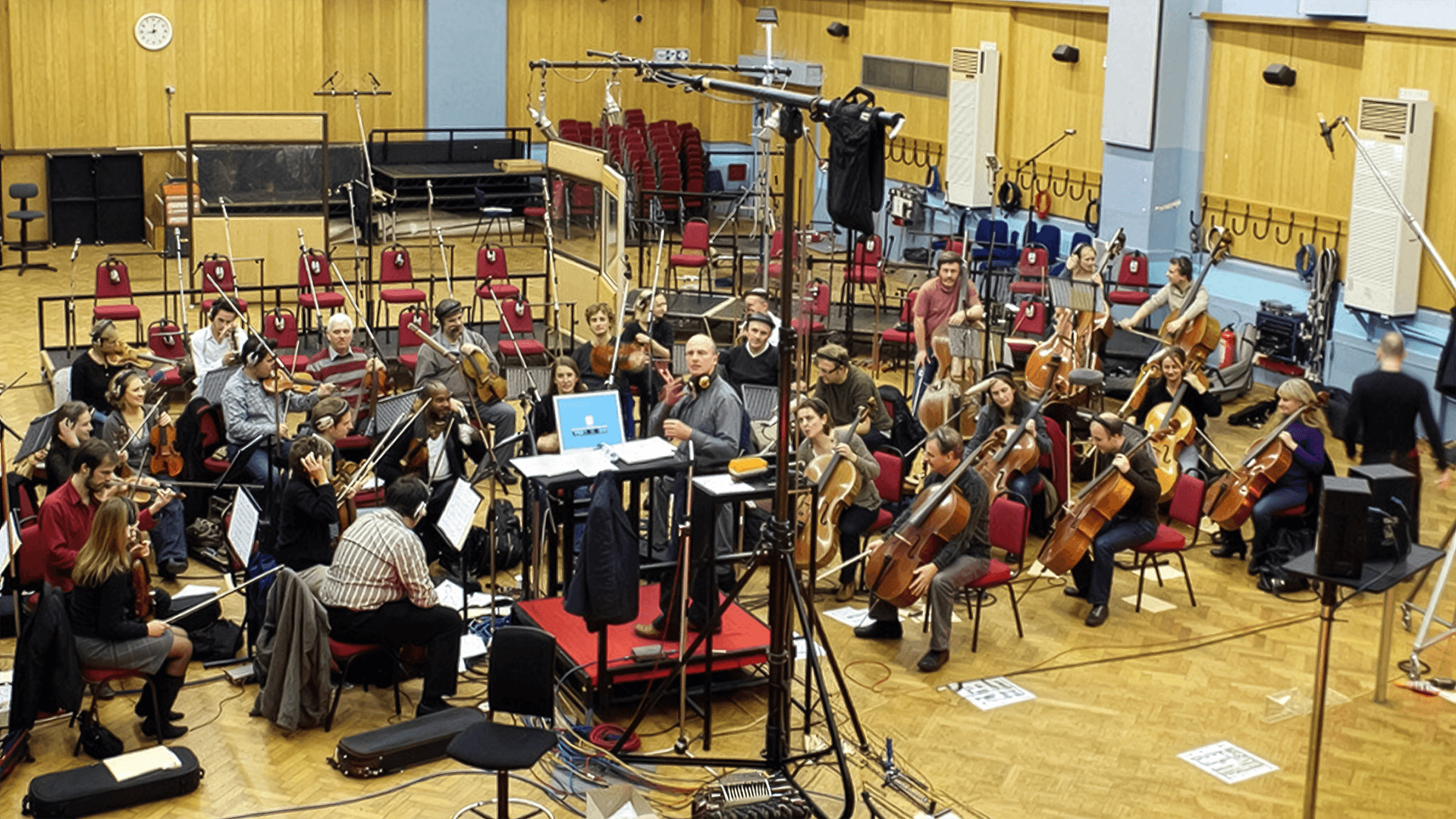
The project also provided a unique and memorable experience beyond the design work itself. As a recognition of the contribution to the project, I was invited to Abbey Road Studios to watch the game’s music being composed by Joris de Man. This moment highlighted the collaborative nature of game development, where visual design, audio, and storytelling come together to create a unified experience.
As the project moved toward completion, the integration of these visual systems helped define the overall tone and immersion of Killzone 2. The broadcast interfaces, branding, and motion graphics worked together to create a believable world where every piece of information felt controlled and intentional.
The designs supported both gameplay and narrative, providing context without interrupting the player experience. By embedding these systems into the world, the game was able to communicate its themes more effectively, allowing players to engage with the story on a deeper level.
The project also provided a unique and memorable experience beyond the design work itself. As a recognition of the contribution to the project, I was invited to Abbey Road Studios to watch the game’s music being composed by Joris de Man. This moment highlighted the collaborative nature of game development, where visual design, audio, and storytelling come together to create a unified experience.
Conclusion
Conclusion
The Killzone 2 project demonstrated how visual design can extend beyond interface functionality to become a core part of world-building. By creating broadcast systems, branding, and motion graphics that aligned with the game’s narrative, the work helped establish a cohesive and believable future world.
The project required balancing realism with stylisation, ensuring that systems felt grounded while still supporting the unique tone of the game. It also highlighted the importance of motion and visual hierarchy in communicating information within dynamic, cinematic environments.
Ultimately, the work showed how design can shape not just how players interact with a game, but how they perceive and understand the world it presents.
The Killzone 2 project demonstrated how visual design can extend beyond interface functionality to become a core part of world-building. By creating broadcast systems, branding, and motion graphics that aligned with the game’s narrative, the work helped establish a cohesive and believable future world.
The project required balancing realism with stylisation, ensuring that systems felt grounded while still supporting the unique tone of the game. It also highlighted the importance of motion and visual hierarchy in communicating information within dynamic, cinematic environments.
Ultimately, the work showed how design can shape not just how players interact with a game, but how they perceive and understand the world it presents.
Takeaways
Takeaways
Visual systems contribute to world-building.
UI, branding and motion graphics help define the identity of a game world.Broadcast-style interfaces can reinforce narrative themes.
News systems helped communicate control and propaganda within the story.Motion design enhances clarity and immersion.
Animation guides attention and brings interfaces to life.Consistency across systems is critical.
Logos, UI and motion must work together as part of a unified visual language.Game development is deeply collaborative.
Working alongside disciplines such as music and storytelling creates a cohesive final experience.
Visual systems contribute to world-building.
UI, branding and motion graphics help define the identity of a game world.Broadcast-style interfaces can reinforce narrative themes.
News systems helped communicate control and propaganda within the story.Motion design enhances clarity and immersion.
Animation guides attention and brings interfaces to life.Consistency across systems is critical.
Logos, UI and motion must work together as part of a unified visual language.Game development is deeply collaborative.
Working alongside disciplines such as music and storytelling creates a cohesive final experience.
Final
Final
More Work