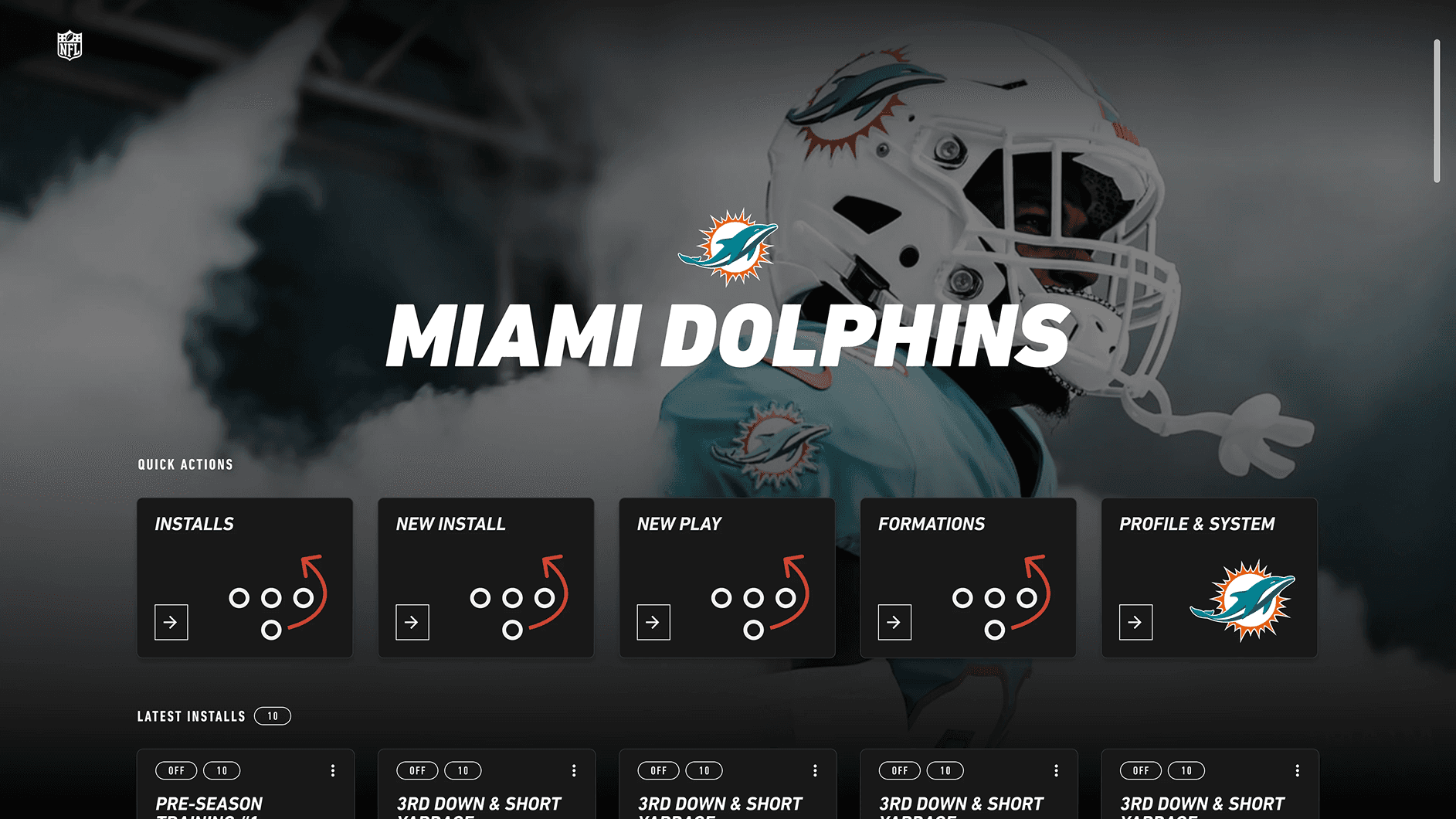
NFL Playbook
NFL Playbook
Client: NFL / Verizon
Agency: UX Magicians
Role: Lead Product Designer
Teams: Remote Leadership Team, 3 Designers, 5 Engineers
Duration: 12 months
Goal: Revolutionise the paper playbook with a application that offers more to the staff and players
Outcome: A creative software system that creates, stores and monitors the game.
Client: NFL / Verizon
Agency: UX Magicians
Role: Lead Product Designer
Teams: Remote Leadership Team, 3 Designers, 5 Engineers
Duration: 12 months
Goal: Revolutionise the paper playbook with a application that offers more to the staff and players
Outcome: A creative software system that creates, stores and monitors the game.
Project Introduction
Project Introduction
In professional American football, preparation and strategy are as important as performance on the field. Teams invest enormous time developing playbooks, analysing opponents, reviewing historical performance, and managing player roles throughout the season.
Traditionally, much of this information was stored in physical playbooks, printed scouting reports, and video analysis systems. While these tools had been used for decades across the National Football League and other leagues, they created several limitations. Playbooks could become outdated quickly, updating plays required manual revisions, and integrating tactical planning with performance data was difficult.
The goal of this project was to rethink how playbooks could function in a modern, digital environment.
Instead of static documents, the vision was to create a dynamic digital platform where coaches could design plays, store tactical knowledge, analyse opponents, and manage teams within a single application.
When the project began, however, the direction was far from clear. The brief was intentionally open-ended. The challenge was not simply to digitise an existing playbook but to explore what a modern coaching platform could become.
My role in the project involved helping define the product vision and designing a system capable of supporting play creation, historical analysis, real-time information, and team management within one unified interface.
The journey began with a question that would shape the entire project: what do coaches actually need from a digital playbook?
In professional American football, preparation and strategy are as important as performance on the field. Teams invest enormous time developing playbooks, analysing opponents, reviewing historical performance, and managing player roles throughout the season.
Traditionally, much of this information was stored in physical playbooks, printed scouting reports, and video analysis systems. While these tools had been used for decades across the National Football League and other leagues, they created several limitations. Playbooks could become outdated quickly, updating plays required manual revisions, and integrating tactical planning with performance data was difficult.
The goal of this project was to rethink how playbooks could function in a modern, digital environment.
Instead of static documents, the vision was to create a dynamic digital platform where coaches could design plays, store tactical knowledge, analyse opponents, and manage teams within a single application.
When the project began, however, the direction was far from clear. The brief was intentionally open-ended. The challenge was not simply to digitise an existing playbook but to explore what a modern coaching platform could become.
My role in the project involved helping define the product vision and designing a system capable of supporting play creation, historical analysis, real-time information, and team management within one unified interface.
The journey began with a question that would shape the entire project: what do coaches actually need from a digital playbook?
Project Story
Project Story
At the beginning of the project, the scope was deliberately vague. There was a broad understanding that playbooks could be digitised, but there was little clarity about what the final product should look like or how coaches would actually use it during their workflow.
Rather than rushing into design, the team began with research.
We explored how coaches prepared for games, how plays were created and stored, how teams analysed opponents, and how game-day decisions were informed by data. What quickly became clear was that the traditional playbook represented only a small part of a much larger ecosystem of information.
Coaches were constantly switching between different tools and sources of data. Plays might be stored in a binder, opponent statistics analysed in spreadsheets, video footage reviewed in separate platforms, and player information tracked elsewhere.
This fragmentation created inefficiencies and made it difficult to connect tactical decisions with performance insights.
The opportunity was to create a centralised digital system that brought these elements together.
Instead of treating the playbook as a static document, the system could function as a living tactical platform—one that evolved over time and responded to data.
At the beginning of the project, the scope was deliberately vague. There was a broad understanding that playbooks could be digitised, but there was little clarity about what the final product should look like or how coaches would actually use it during their workflow.
Rather than rushing into design, the team began with research.
We explored how coaches prepared for games, how plays were created and stored, how teams analysed opponents, and how game-day decisions were informed by data. What quickly became clear was that the traditional playbook represented only a small part of a much larger ecosystem of information.
Coaches were constantly switching between different tools and sources of data. Plays might be stored in a binder, opponent statistics analysed in spreadsheets, video footage reviewed in separate platforms, and player information tracked elsewhere.
This fragmentation created inefficiencies and made it difficult to connect tactical decisions with performance insights.
The opportunity was to create a centralised digital system that brought these elements together.
Instead of treating the playbook as a static document, the system could function as a living tactical platform—one that evolved over time and responded to data.
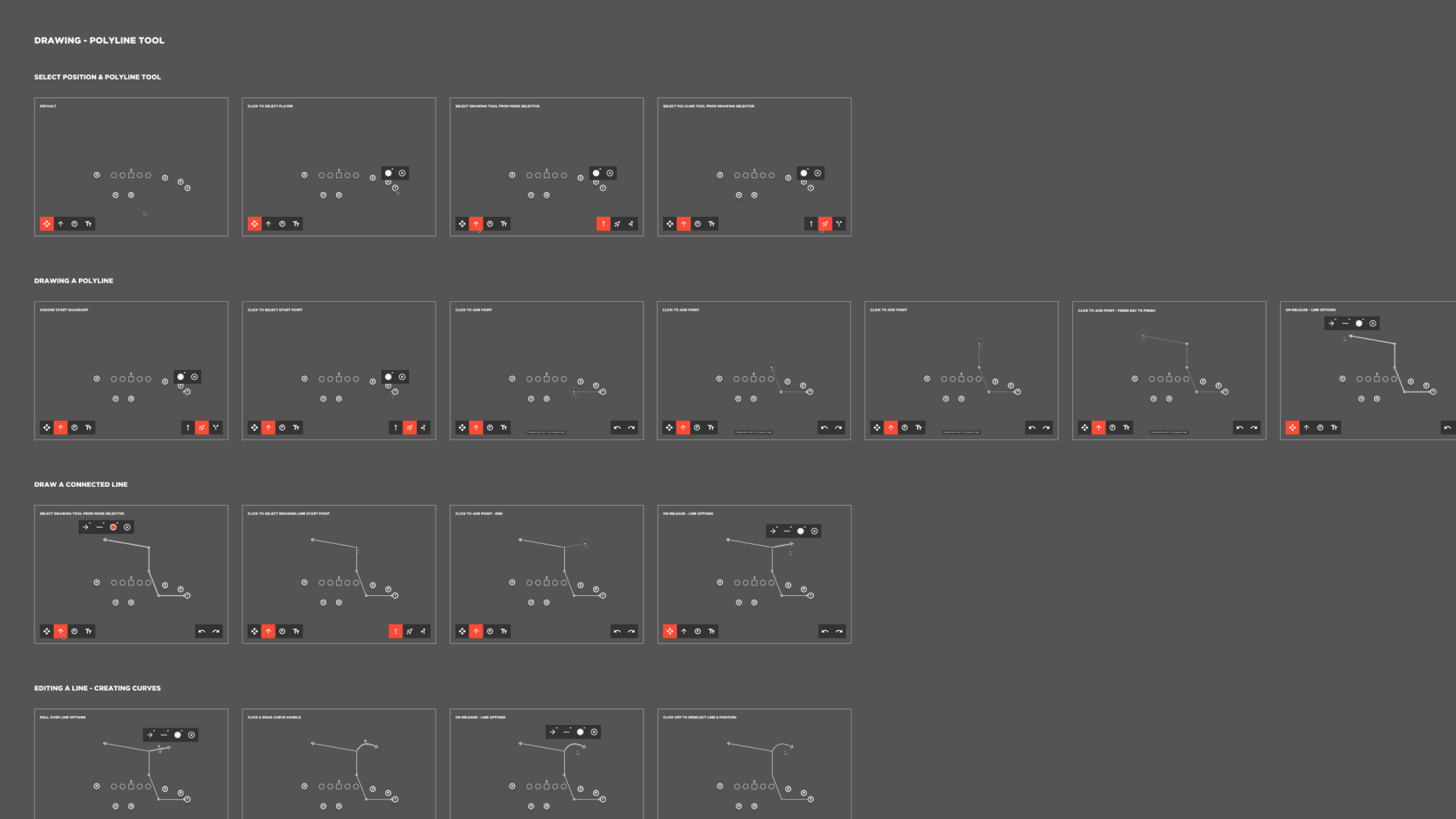
The turning point in the project came when the team reframed the product not as a digital playbook, but as a strategic coaching platform.
This shift changed everything about how the system was designed.
At its core was a powerful play creation tool. Coaches could draw plays digitally, define player routes and formations, and store them in a searchable library. Plays could be tagged, categorised, and modified quickly, allowing teams to experiment with new tactics without rebuilding diagrams from scratch.
Beyond play creation, the system incorporated historical data analysis. Coaches could review past performance against specific opponents, identify patterns in defensive schemes, and evaluate which plays had historically performed best in certain situations.
The platform also integrated live game data and scoring information, giving coaching staff real-time insights during matches.
Finally, the system included team management tools, allowing coaches to organise rosters, track player roles, and align tactical plans with available personnel.
By bringing these elements together, the application transformed the traditional playbook into a dynamic system where strategy, data, and team management could operate together.
Instead of flipping through pages of printed plays, coaches could explore a living tactical environment that adapted as the season evolved.he produc transformed the smartphone into a complete field-service toolkit.
The turning point in the project came when the team reframed the product not as a digital playbook, but as a strategic coaching platform.
This shift changed everything about how the system was designed.
At its core was a powerful play creation tool. Coaches could draw plays digitally, define player routes and formations, and store them in a searchable library. Plays could be tagged, categorised, and modified quickly, allowing teams to experiment with new tactics without rebuilding diagrams from scratch.
Beyond play creation, the system incorporated historical data analysis. Coaches could review past performance against specific opponents, identify patterns in defensive schemes, and evaluate which plays had historically performed best in certain situations.
The platform also integrated live game data and scoring information, giving coaching staff real-time insights during matches.
Finally, the system included team management tools, allowing coaches to organise rosters, track player roles, and align tactical plans with available personnel.
By bringing these elements together, the application transformed the traditional playbook into a dynamic system where strategy, data, and team management could operate together.
Instead of flipping through pages of printed plays, coaches could explore a living tactical environment that adapted as the season evolved.he produc transformed the smartphone into a complete field-service toolkit.
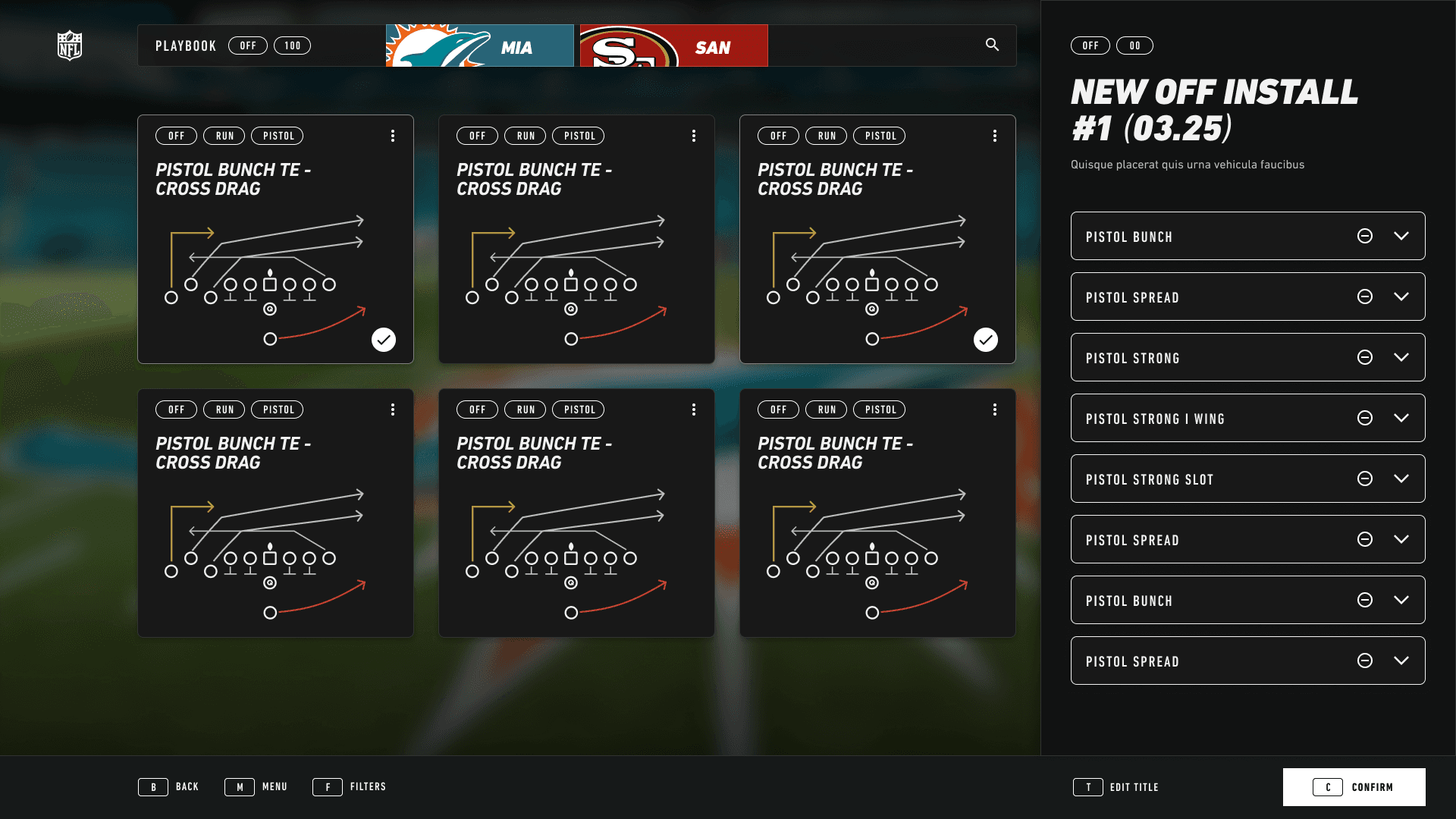
As the concept matured, the benefits of the integrated approach became increasingly clear.
The digital play library allowed coaching staff to store hundreds of plays while still being able to locate specific formations quickly. Plays could be organised by situation, opponent tendencies, or player strengths, making preparation far more flexible than a traditional binder.
The integration of historical data gave coaches new strategic insights. Instead of relying solely on intuition or memory, they could evaluate which tactics had historically succeeded against particular defensive setups.
Live game information also created opportunities for faster adjustments. By combining real-time data with stored plays, coaching staff could adapt their strategy during games more effectively.
Perhaps most importantly, the platform created a shared environment where coaches, analysts, and team staff could collaborate around the same tactical information.
What began as a vague concept for a digital playbook evolved into a comprehensive football operations platform.
As the concept matured, the benefits of the integrated approach became increasingly clear.
The digital play library allowed coaching staff to store hundreds of plays while still being able to locate specific formations quickly. Plays could be organised by situation, opponent tendencies, or player strengths, making preparation far more flexible than a traditional binder.
The integration of historical data gave coaches new strategic insights. Instead of relying solely on intuition or memory, they could evaluate which tactics had historically succeeded against particular defensive setups.
Live game information also created opportunities for faster adjustments. By combining real-time data with stored plays, coaching staff could adapt their strategy during games more effectively.
Perhaps most importantly, the platform created a shared environment where coaches, analysts, and team staff could collaborate around the same tactical information.
What began as a vague concept for a digital playbook evolved into a comprehensive football operations platform.
Conclusion
Conclusion
The Digital NFL Playbook project explored how one of the most traditional tools in professional football could evolve in the digital age.
By combining play creation, historical analysis, live game data, and team management within a single application, the project demonstrated how software could support the complex decision-making processes that define modern football strategy.
What started as an undefined brief ultimately became a clear vision: transform the playbook from a static reference document into a living strategic system.
The result was a concept that connected tactics, data, and team organisation in ways that traditional playbooks never could.
More broadly, the project showed how digital platforms can reshape long-established workflows, enabling coaches and analysts to focus more on strategy and less on managing information.
The Digital NFL Playbook project explored how one of the most traditional tools in professional football could evolve in the digital age.
By combining play creation, historical analysis, live game data, and team management within a single application, the project demonstrated how software could support the complex decision-making processes that define modern football strategy.
What started as an undefined brief ultimately became a clear vision: transform the playbook from a static reference document into a living strategic system.
The result was a concept that connected tactics, data, and team organisation in ways that traditional playbooks never could.
More broadly, the project showed how digital platforms can reshape long-established workflows, enabling coaches and analysts to focus more on strategy and less on managing information.

Takeaways
Takeaways
This project reinforced several important lessons about designing complex sports software.
First, unclear briefs can be valuable starting points. By embracing exploration and research early in the process, the team was able to uncover opportunities that would not have been visible with a more rigid product definition.
Second, traditional tools often represent much larger workflows. Digitising a playbook required understanding the full ecosystem of coaching, analysis, and team management.
Third, data becomes most powerful when integrated directly into decision-making environments. By combining historical analysis with tactical tools, the platform helped coaches turn information into actionable strategy.
Finally, collaboration is central to modern sports operations. Designing a system that multiple roles could use together created a stronger foundation for team strategy and preparation.
This project reinforced several important lessons about designing complex sports software.
First, unclear briefs can be valuable starting points. By embracing exploration and research early in the process, the team was able to uncover opportunities that would not have been visible with a more rigid product definition.
Second, traditional tools often represent much larger workflows. Digitising a playbook required understanding the full ecosystem of coaching, analysis, and team management.
Third, data becomes most powerful when integrated directly into decision-making environments. By combining historical analysis with tactical tools, the platform helped coaches turn information into actionable strategy.
Finally, collaboration is central to modern sports operations. Designing a system that multiple roles could use together created a stronger foundation for team strategy and preparation.
More Work