The Walking Dead Empires
The Walking Dead Empires
Client: Gala Games
Agency: UX Magicians
Role: Lead UX/UI Designer
Teams: Remote team - 5 people
Duration: 12 months
Goal: To set a brand style system and flows for a new mobile game.
Outcome: A beautifully crafted old and worn style experience.
Focus: Direction, UX, UI, Prototyping, Motion Design, 2D, 3D Animation
Client: Gala Games
Agency: UX Magicians
Role: Lead UX/UI Designer
Teams: Remote team - 5 people
Duration: 12 months
Goal: To set a brand style system and flows for a new mobile game.
Outcome: A beautifully crafted old and worn style experience.
Focus: Direction, UX, UI, Prototyping, Motion Design, 2D, 3D Animation
Project Introduction
Project Introduction
Designing games around emerging technologies often introduces both exciting opportunities and significant risks. New technical foundations can open up entirely new gameplay systems, but they also require designers to rethink traditional user experiences and anticipate how players will respond to unfamiliar mechanics. The Walking Dead: Empires was one such project, built within the universe of the The Walking Dead and designed as a multiplayer survival experience where players could explore a post-apocalyptic world, build settlements, gather resources, and collaborate with other survivors.
What made the project particularly ambitious was that the game was built around blockchain technology, with core gameplay systems designed around digital ownership and player economies. Instead of simply collecting items within a traditional game environment, players could own assets such as land, equipment, and resources as blockchain-backed items. This created the possibility of persistent economies and player-driven worlds, where digital assets could exist independently of the game environment itself.
Working through UX Magicians, our team was tasked with designing the UX foundations, defining the UI visual style, and building the design system that would support the game’s complex survival mechanics. As Lead UX/UI Designer, my role focused on establishing the interface language, building scalable UX flows for systems like inventory and crafting, and creating a design framework that could be shared with the external game development studio responsible for engineering and gameplay implementation.
The challenge was to design an experience that balanced the gritty survival tone of The Walking Dead with the complexity introduced by blockchain-based systems, while still keeping the experience intuitive for players.
Designing games around emerging technologies often introduces both exciting opportunities and significant risks. New technical foundations can open up entirely new gameplay systems, but they also require designers to rethink traditional user experiences and anticipate how players will respond to unfamiliar mechanics. The Walking Dead: Empires was one such project, built within the universe of the The Walking Dead and designed as a multiplayer survival experience where players could explore a post-apocalyptic world, build settlements, gather resources, and collaborate with other survivors.
What made the project particularly ambitious was that the game was built around blockchain technology, with core gameplay systems designed around digital ownership and player economies. Instead of simply collecting items within a traditional game environment, players could own assets such as land, equipment, and resources as blockchain-backed items. This created the possibility of persistent economies and player-driven worlds, where digital assets could exist independently of the game environment itself.
Working through UX Magicians, our team was tasked with designing the UX foundations, defining the UI visual style, and building the design system that would support the game’s complex survival mechanics. As Lead UX/UI Designer, my role focused on establishing the interface language, building scalable UX flows for systems like inventory and crafting, and creating a design framework that could be shared with the external game development studio responsible for engineering and gameplay implementation.
The challenge was to design an experience that balanced the gritty survival tone of The Walking Dead with the complexity introduced by blockchain-based systems, while still keeping the experience intuitive for players.
Project Story
Project Story
At the beginning of the project, the design challenge extended far beyond the interface itself. The team needed to translate the emotional tone of The Walking Dead into gameplay systems while also integrating a technology stack that was still relatively new to the gaming industry. The world of the franchise is defined by scarcity, survival, and tension, and the interface needed to support that atmosphere while still allowing players to manage complex systems such as crafting, inventory management, settlement construction, and exploration.
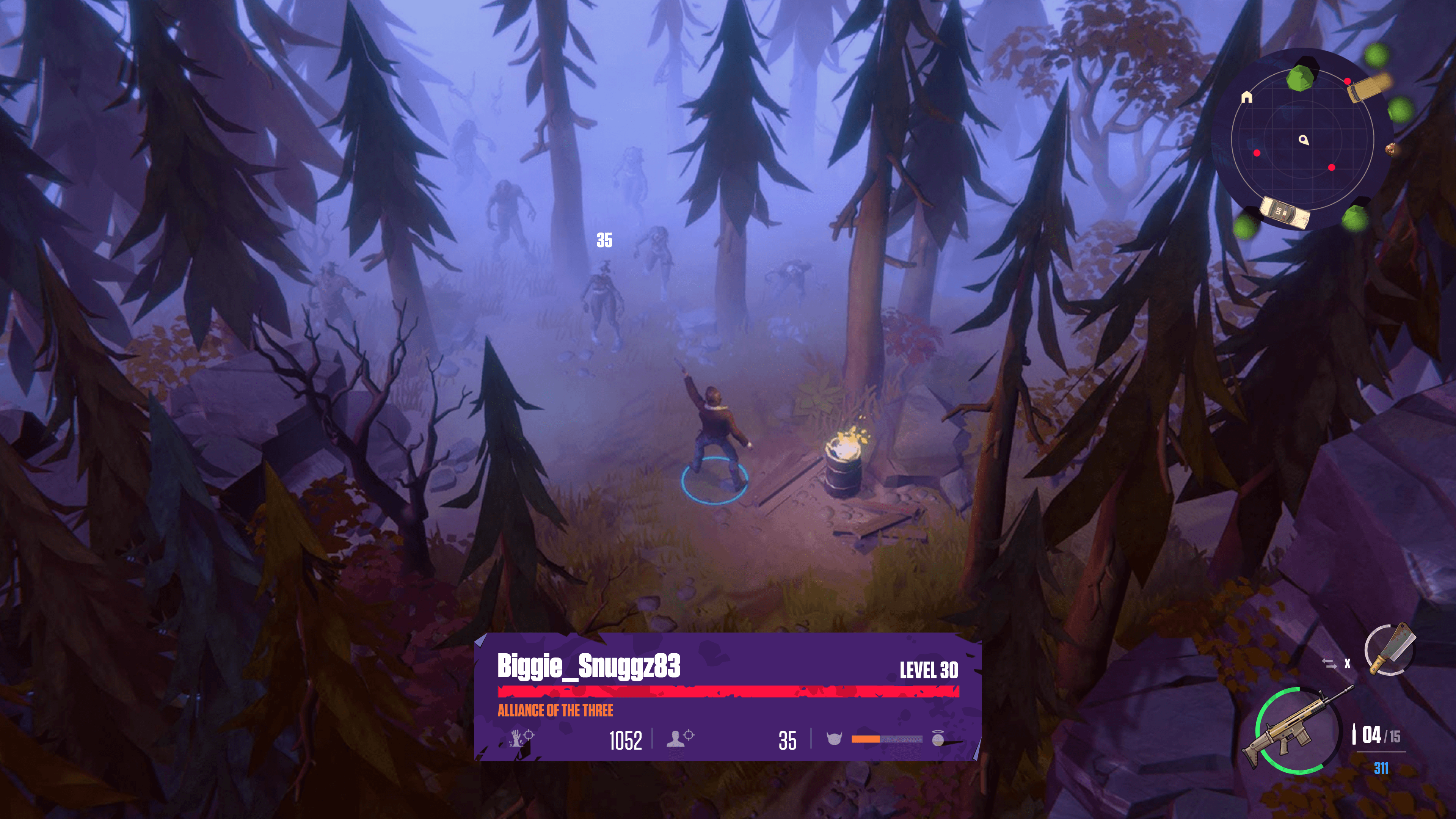
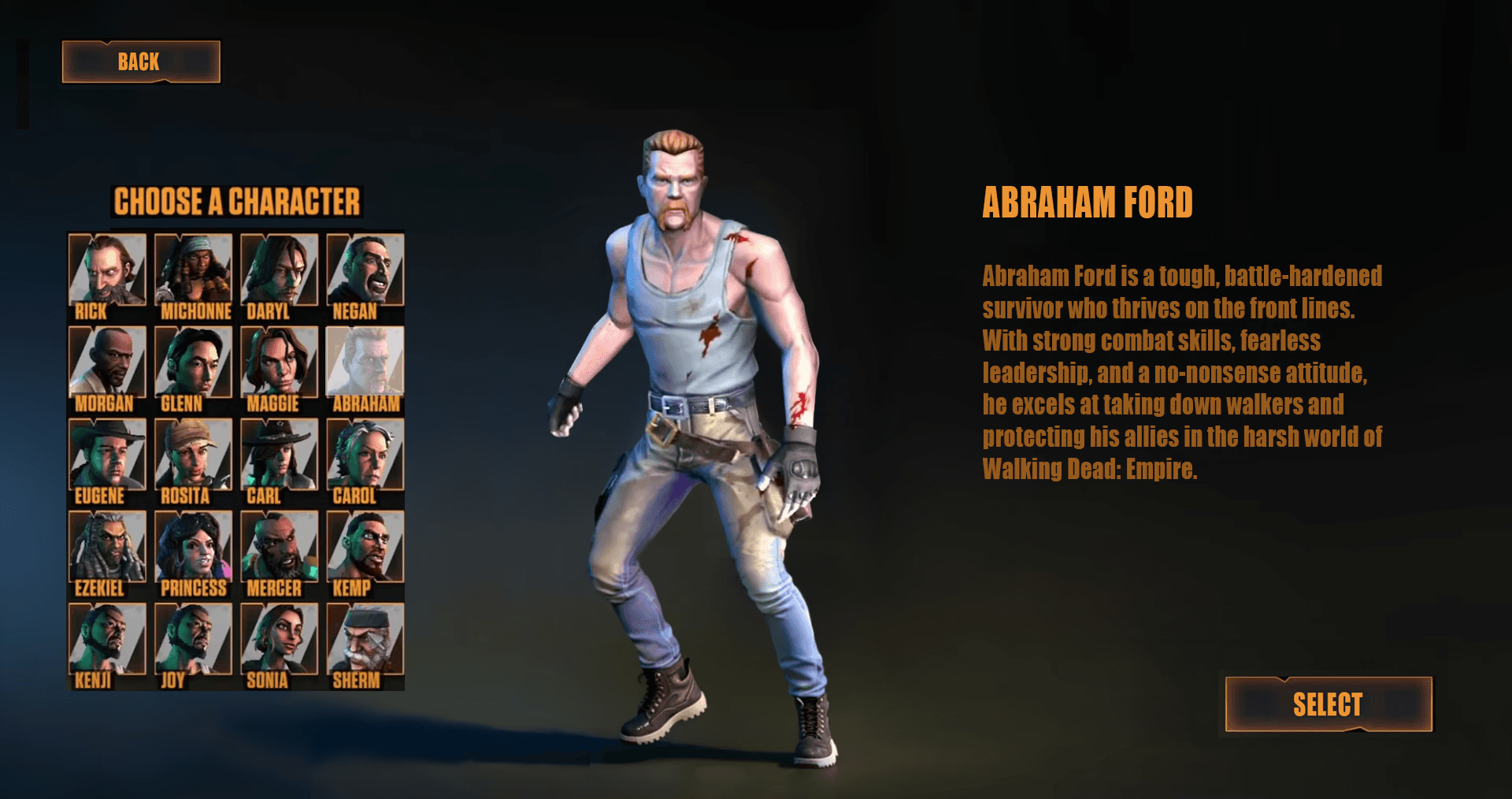
Early design exploration focused on creating an interface that felt authentic to the survival environment. Instead of polished futuristic UI elements, the visual language incorporated worn materials, rough textures, and utilitarian structures that felt as though they were built from scavenged technology. Panels appeared layered and mechanical, reinforcing the idea that players were interacting with tools assembled from whatever resources remained after the collapse of society.
At the same time, the blockchain aspect of the game introduced new design considerations. Players were not simply interacting with game items—they were interacting with assets that existed within a broader digital ecosystem. This meant the UX needed to communicate ownership, transactions, and asset management clearly without overwhelming players with technical complexity.
Another layer of complexity came from the structure of the project itself. Our design team was working remotely while the engineering and game development were handled by a separate studio. This meant that communication, documentation, and design handoff became essential parts of the workflow. The interface system needed to be structured clearly enough that developers could implement it accurately without constant clarification.
At the beginning of the project, the design challenge extended far beyond the interface itself. The team needed to translate the emotional tone of The Walking Dead into gameplay systems while also integrating a technology stack that was still relatively new to the gaming industry. The world of the franchise is defined by scarcity, survival, and tension, and the interface needed to support that atmosphere while still allowing players to manage complex systems such as crafting, inventory management, settlement construction, and exploration.
Early design exploration focused on creating an interface that felt authentic to the survival environment. Instead of polished futuristic UI elements, the visual language incorporated worn materials, rough textures, and utilitarian structures that felt as though they were built from scavenged technology. Panels appeared layered and mechanical, reinforcing the idea that players were interacting with tools assembled from whatever resources remained after the collapse of society.
At the same time, the blockchain aspect of the game introduced new design considerations. Players were not simply interacting with game items—they were interacting with assets that existed within a broader digital ecosystem. This meant the UX needed to communicate ownership, transactions, and asset management clearly without overwhelming players with technical complexity.
Another layer of complexity came from the structure of the project itself. Our design team was working remotely while the engineering and game development were handled by a separate studio. This meant that communication, documentation, and design handoff became essential parts of the workflow. The interface system needed to be structured clearly enough that developers could implement it accurately without constant clarification.
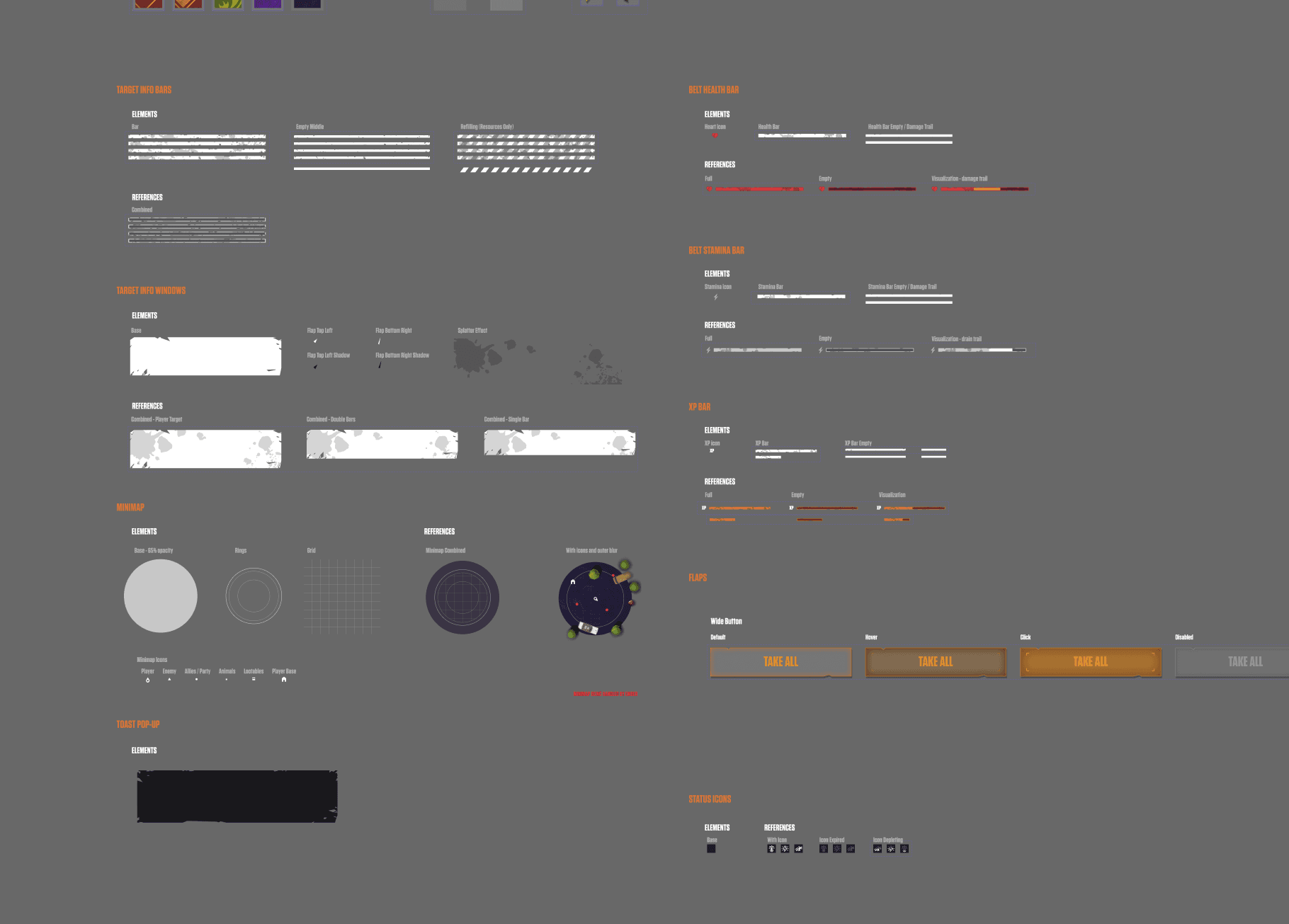
The turning point in the project came when the team shifted from designing individual interfaces to building a comprehensive design system capable of supporting both traditional survival gameplay and blockchain-based asset management. The design system defined reusable components, interface behaviours, and layout structures that could support everything from inventory management and crafting systems to settlement controls and resource tracking.
Because the engineering team was external, the design system became a crucial bridge between design and development. Detailed component libraries, layout specifications, and interaction flows allowed developers to understand how the interface should behave within the game engine. Prototypes and structured documentation helped ensure that gameplay systems could be implemented consistently even when teams were working across different locations and time zones.
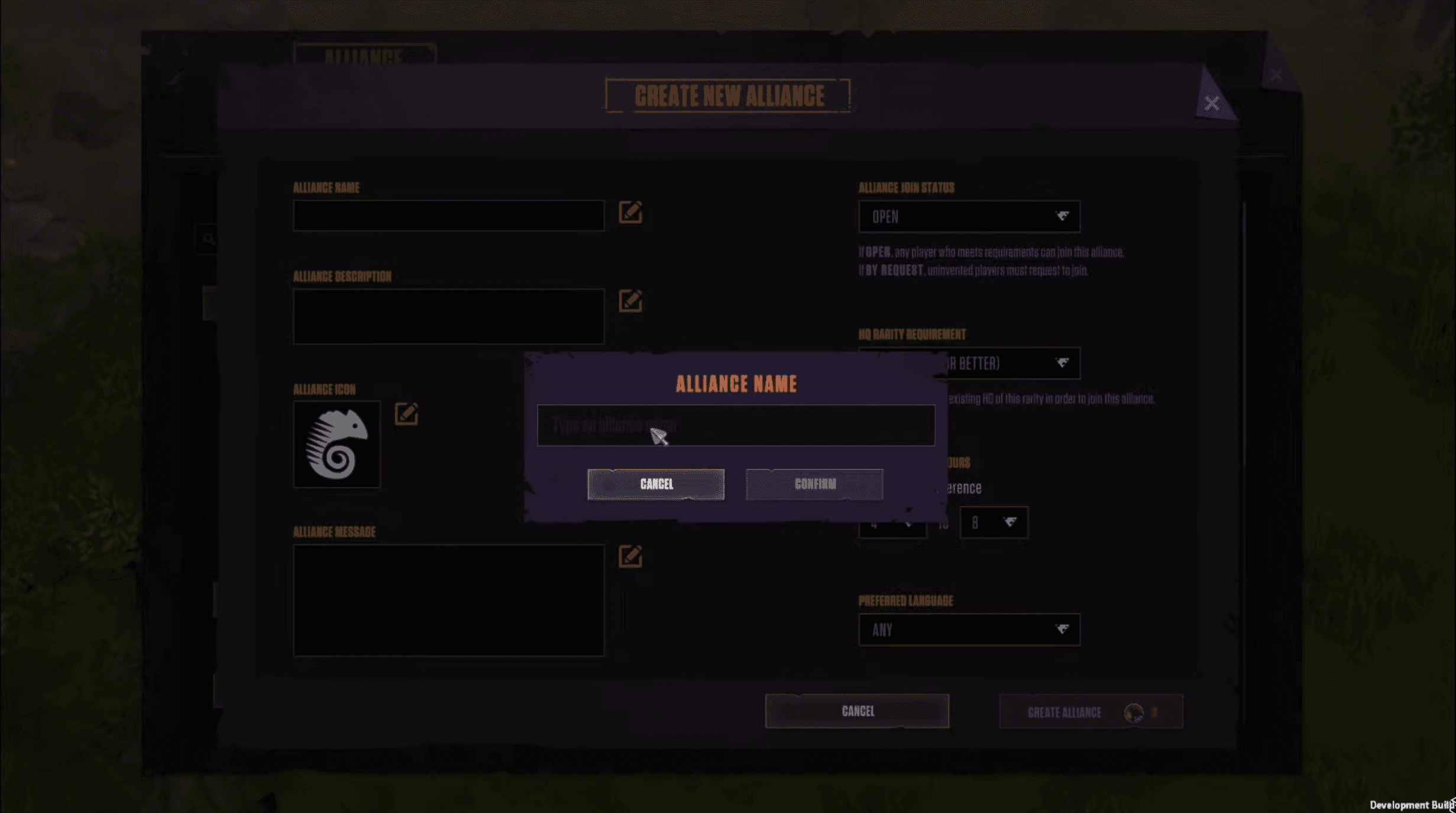
From a UX perspective, one of the most interesting challenges was integrating blockchain ownership into the gameplay experience without allowing it to dominate the interface. The goal was to keep players focused on survival, exploration, and collaboration while the blockchain infrastructure operated largely in the background. This required careful design decisions about how ownership and asset systems were presented to players.
By establishing clear interaction patterns and reusable UI structures, the design system helped unify the visual identity of the game while supporting its technical complexity.
The turning point in the project came when the team shifted from designing individual interfaces to building a comprehensive design system capable of supporting both traditional survival gameplay and blockchain-based asset management. The design system defined reusable components, interface behaviours, and layout structures that could support everything from inventory management and crafting systems to settlement controls and resource tracking.
Because the engineering team was external, the design system became a crucial bridge between design and development. Detailed component libraries, layout specifications, and interaction flows allowed developers to understand how the interface should behave within the game engine. Prototypes and structured documentation helped ensure that gameplay systems could be implemented consistently even when teams were working across different locations and time zones.
From a UX perspective, one of the most interesting challenges was integrating blockchain ownership into the gameplay experience without allowing it to dominate the interface. The goal was to keep players focused on survival, exploration, and collaboration while the blockchain infrastructure operated largely in the background. This required careful design decisions about how ownership and asset systems were presented to players.
By establishing clear interaction patterns and reusable UI structures, the design system helped unify the visual identity of the game while supporting its technical complexity.
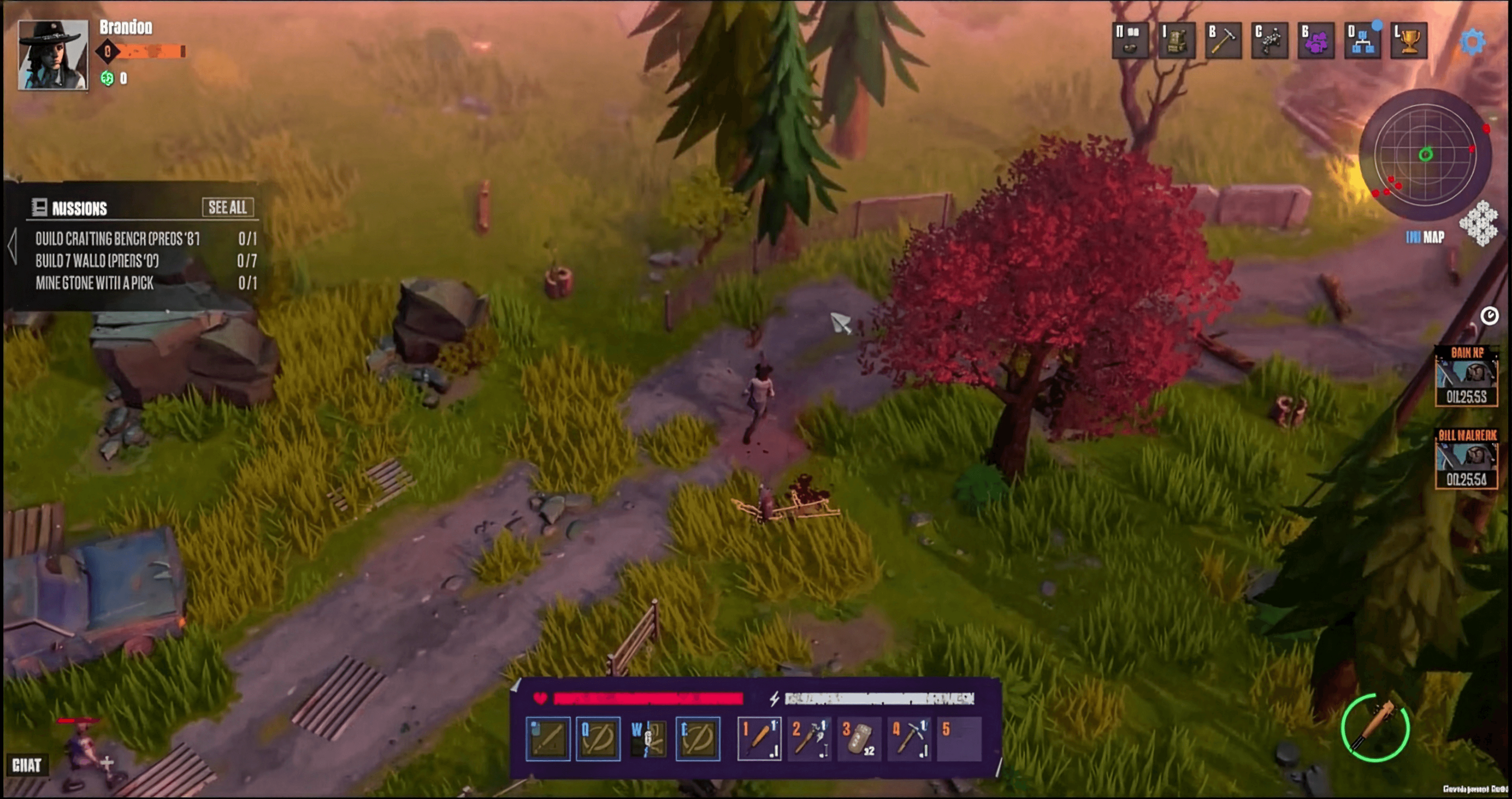
As development progressed, the design system proved valuable in supporting collaboration between the remote design team and the external development studio. Clear documentation and reusable UI components helped ensure consistency across gameplay systems while reducing friction during implementation.
The interface successfully captured the tone of the franchise while supporting the survival mechanics required by the game. Players could navigate inventory systems, build settlements, manage resources, and explore the world while still feeling immersed in the gritty atmosphere of The Walking Dead universe.
However, the blockchain foundation that made the project technically ambitious also created challenges for the broader player community. While the concept of player-owned assets was exciting from an innovation perspective, blockchain gaming faced increasing skepticism within the wider gaming market. Many players were hesitant to engage with crypto-based systems, and the volatility of the blockchain gaming ecosystem made it difficult for projects to maintain long-term stability.
Despite the strength of the core game design and the progress made during development, these external factors ultimately limited the lifespan of the game.
As development progressed, the design system proved valuable in supporting collaboration between the remote design team and the external development studio. Clear documentation and reusable UI components helped ensure consistency across gameplay systems while reducing friction during implementation.
The interface successfully captured the tone of the franchise while supporting the survival mechanics required by the game. Players could navigate inventory systems, build settlements, manage resources, and explore the world while still feeling immersed in the gritty atmosphere of The Walking Dead universe.
However, the blockchain foundation that made the project technically ambitious also created challenges for the broader player community. While the concept of player-owned assets was exciting from an innovation perspective, blockchain gaming faced increasing skepticism within the wider gaming market. Many players were hesitant to engage with crypto-based systems, and the volatility of the blockchain gaming ecosystem made it difficult for projects to maintain long-term stability.
Despite the strength of the core game design and the progress made during development, these external factors ultimately limited the lifespan of the game.
Conclusion
Conclusion
The Walking Dead: Empires explored how emerging technologies could reshape player ownership and economies within multiplayer games. The project demonstrated how blockchain systems could enable persistent player-driven worlds while introducing entirely new design challenges for UX teams.
From a design perspective, the project required balancing a well-known narrative universe, complex survival mechanics, and experimental technology within a single cohesive experience. The design system played a crucial role in connecting the work of distributed teams and ensuring that the interface remained consistent as gameplay systems evolved.
While the game ultimately had a short lifespan due to the challenges surrounding blockchain gaming adoption, the project highlighted the potential of combining strong franchise storytelling with innovative digital ownership models.
The Walking Dead: Empires explored how emerging technologies could reshape player ownership and economies within multiplayer games. The project demonstrated how blockchain systems could enable persistent player-driven worlds while introducing entirely new design challenges for UX teams.
From a design perspective, the project required balancing a well-known narrative universe, complex survival mechanics, and experimental technology within a single cohesive experience. The design system played a crucial role in connecting the work of distributed teams and ensuring that the interface remained consistent as gameplay systems evolved.
While the game ultimately had a short lifespan due to the challenges surrounding blockchain gaming adoption, the project highlighted the potential of combining strong franchise storytelling with innovative digital ownership models.
Takeaways
Takeaways
The Walking Dead: Empires project provided several insights into designing complex game systems that combine established franchises, distributed development teams, and emerging technologies.
Emerging technologies can unlock new gameplay possibilities.
Blockchain introduced the concept of true digital ownership for in-game assets, creating opportunities for persistent player economies and new types of multiplayer ecosystems.Innovation also introduces strategic risk.
While blockchain was an exciting foundation for the game, adoption barriers and skepticism within the gaming community ultimately limited the project’s long-term success.Design systems are essential when working with distributed teams.
Because engineering was handled by a separate game studio, clear component libraries, documentation, and interaction patterns were critical for ensuring the design translated correctly into the game engine.UX must hide complexity, not expose it.
Integrating blockchain mechanics required careful UX decisions so that players could focus on survival gameplay while the underlying ownership systems operated largely in the background.Franchise-based games require careful tonal alignment.
The interface design needed to reflect the gritty survival atmosphere of The Walking Dead while still supporting modern gameplay systems such as inventory management, crafting, and settlement building.
The Walking Dead: Empires project provided several insights into designing complex game systems that combine established franchises, distributed development teams, and emerging technologies.
Emerging technologies can unlock new gameplay possibilities.
Blockchain introduced the concept of true digital ownership for in-game assets, creating opportunities for persistent player economies and new types of multiplayer ecosystems.Innovation also introduces strategic risk.
While blockchain was an exciting foundation for the game, adoption barriers and skepticism within the gaming community ultimately limited the project’s long-term success.Design systems are essential when working with distributed teams.
Because engineering was handled by a separate game studio, clear component libraries, documentation, and interaction patterns were critical for ensuring the design translated correctly into the game engine.UX must hide complexity, not expose it.
Integrating blockchain mechanics required careful UX decisions so that players could focus on survival gameplay while the underlying ownership systems operated largely in the background.Franchise-based games require careful tonal alignment.
The interface design needed to reflect the gritty survival atmosphere of The Walking Dead while still supporting modern gameplay systems such as inventory management, crafting, and settlement building.
Prototype
Prototype
More Work