Xlantis Immersive Metaverse
Xlantis Immersive Metaverse
Client: Xmanna
Agency: Atlier 11
Role: Lead Product Designer
Teams: 2 Global teams, 5 PMs, 6 Designers, 12 Engineers
Duration: 12 months
Goal: Create a world where digital communities grow and different industries merge.
Outcome: A pitch package that was used to secure funding.
Client: Xmanna
Agency: Atlier 11
Role: Lead Product Designer
Teams: 2 Global teams, 5 PMs, 6 Designers, 12 Engineers
Duration: 12 months
Goal: Create a world where digital communities grow and different industries merge.
Outcome: A pitch package that was used to secure funding.
Project Introduction
Project Introduction
As digital communities grow and online entertainment evolves, new platforms are emerging that aim to blend gaming, social interaction, live events, and digital ownership into unified virtual environments. These experiences often referred to as metaverse platforms seek to create persistent worlds where users can participate in entertainment, community activities, and digital economies.
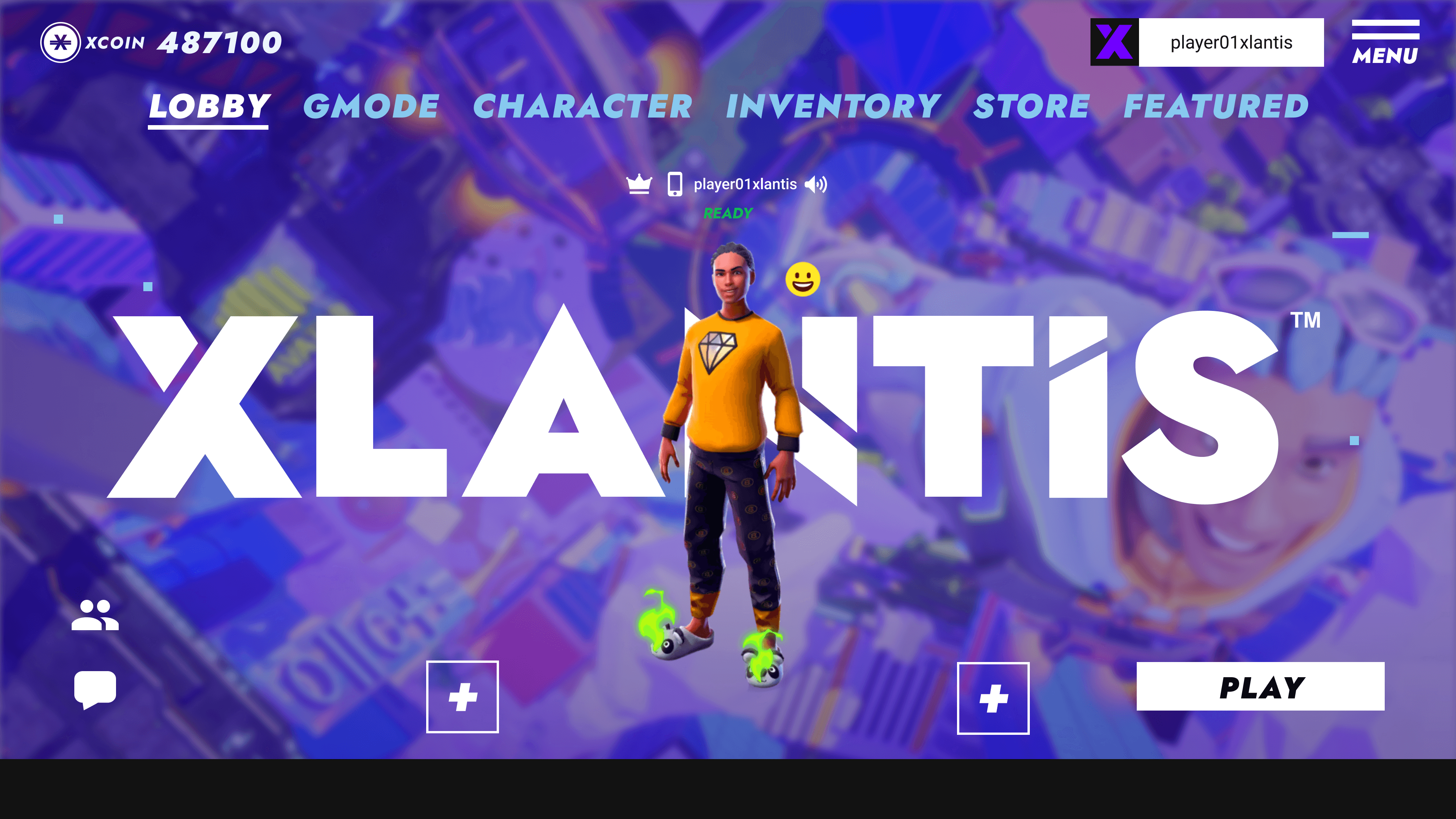
The XLANTIS project was conceived as one such platform: an open-world digital ecosystem designed to host games, sports experiences, live concerts and interactive social spaces. The ambition was to build a multi-platform virtual environment where users could explore immersive worlds while participating in digital events and owning virtual assets. XLANTIS metaverse platform aimed to combine elements of gaming, community engagement, and blockchain-enabled digital ownership within a single ecosystem.
The platform was developed using Unreal Engine 5 and amazon cloud infrastructure, allowing for large-scale immersive environments with photorealistic rendering and real-time interaction.
My role in the project involved contributing to the design and conceptual development of the experience helping shape how users would interact with the platform and how complex systems such as gaming environments, social spaces and entertainment experiences could coexist within a unified virtual world.
The challenge was not simply to build a game or social platform. It was to design a living digital ecosystem that could support multiple forms of engagement from gaming and social interaction to large-scale live events.
As digital communities grow and online entertainment evolves, new platforms are emerging that aim to blend gaming, social interaction, live events, and digital ownership into unified virtual environments. These experiences often referred to as metaverse platforms seek to create persistent worlds where users can participate in entertainment, community activities, and digital economies.
The XLANTIS project was conceived as one such platform: an open-world digital ecosystem designed to host games, sports experiences, live concerts and interactive social spaces. The ambition was to build a multi-platform virtual environment where users could explore immersive worlds while participating in digital events and owning virtual assets. XLANTIS metaverse platform aimed to combine elements of gaming, community engagement, and blockchain-enabled digital ownership within a single ecosystem.
The platform was developed using Unreal Engine 5 and amazon cloud infrastructure, allowing for large-scale immersive environments with photorealistic rendering and real-time interaction.
My role in the project involved contributing to the design and conceptual development of the experience helping shape how users would interact with the platform and how complex systems such as gaming environments, social spaces and entertainment experiences could coexist within a unified virtual world.
The challenge was not simply to build a game or social platform. It was to design a living digital ecosystem that could support multiple forms of engagement from gaming and social interaction to large-scale live events.
Project Story
Project Story
At the outset of the project, the ambition for XLANTIS was expansive. I was excited the platform was envisioned as a place where multiple forms of digital experience could coexist: games, virtual concerts, sports engagement, branded environments and user-owned digital assets through XMANNA.
However, turning this vision into a cohesive product presented a series of large challenges.
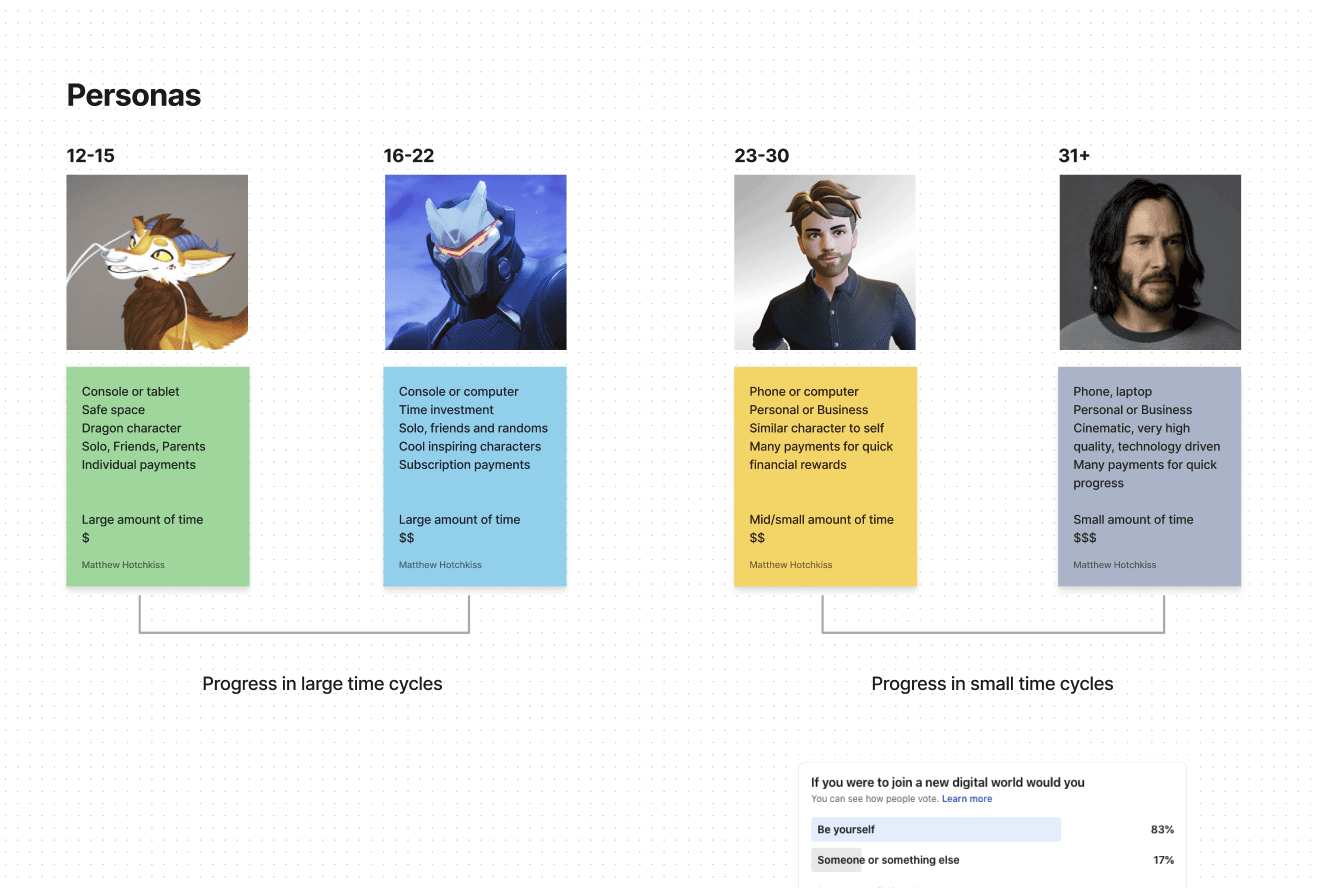
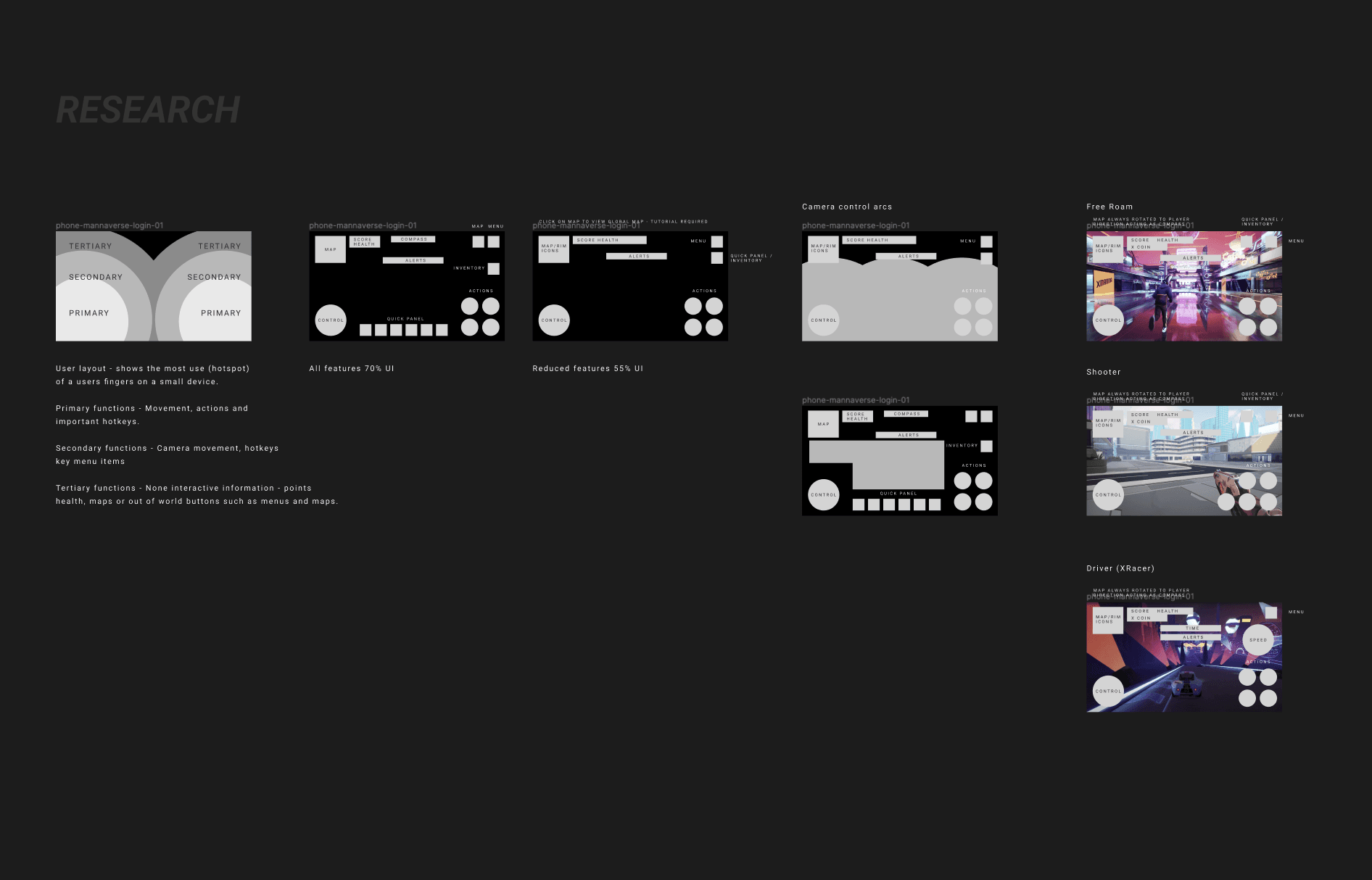
One of the biggest was defining how users would move through and interact with such a complex environment. Unlike traditional games with clear objectives and linear flows, a metaverse platform must support many different user motivations. Some visitors might want to play games, others attend events, socialise with friends, or explore branded worlds.
Another challenge was scale. The platform was intended to be a persistent open world capable of hosting large numbers of users simultaneously while maintaining high visual fidelity. Achieving this required a design approach that balanced immersive environments with technical performance.
Finally, there was the challenge of digital ownership and community engagement. A core aspect of the XLANTIS ecosystem was enabling users and partners to create spaces within the world, host events, and interact with fans through digital assets and experiences.
To address these challenges, the design process focused on defining the structure of the world itself how users would navigate it, how experiences would be layered within it and how brands, communities and creators could participate in the ecosystem.
At the outset of the project, the ambition for XLANTIS was expansive. I was excited the platform was envisioned as a place where multiple forms of digital experience could coexist: games, virtual concerts, sports engagement, branded environments and user-owned digital assets through XMANNA.
However, turning this vision into a cohesive product presented a series of large challenges.
One of the biggest was defining how users would move through and interact with such a complex environment. Unlike traditional games with clear objectives and linear flows, a metaverse platform must support many different user motivations. Some visitors might want to play games, others attend events, socialise with friends, or explore branded worlds.
Another challenge was scale. The platform was intended to be a persistent open world capable of hosting large numbers of users simultaneously while maintaining high visual fidelity. Achieving this required a design approach that balanced immersive environments with technical performance.
Finally, there was the challenge of digital ownership and community engagement. A core aspect of the XLANTIS ecosystem was enabling users and partners to create spaces within the world, host events, and interact with fans through digital assets and experiences.
To address these challenges, the design process focused on defining the structure of the world itself how users would navigate it, how experiences would be layered within it and how brands, communities and creators could participate in the ecosystem.
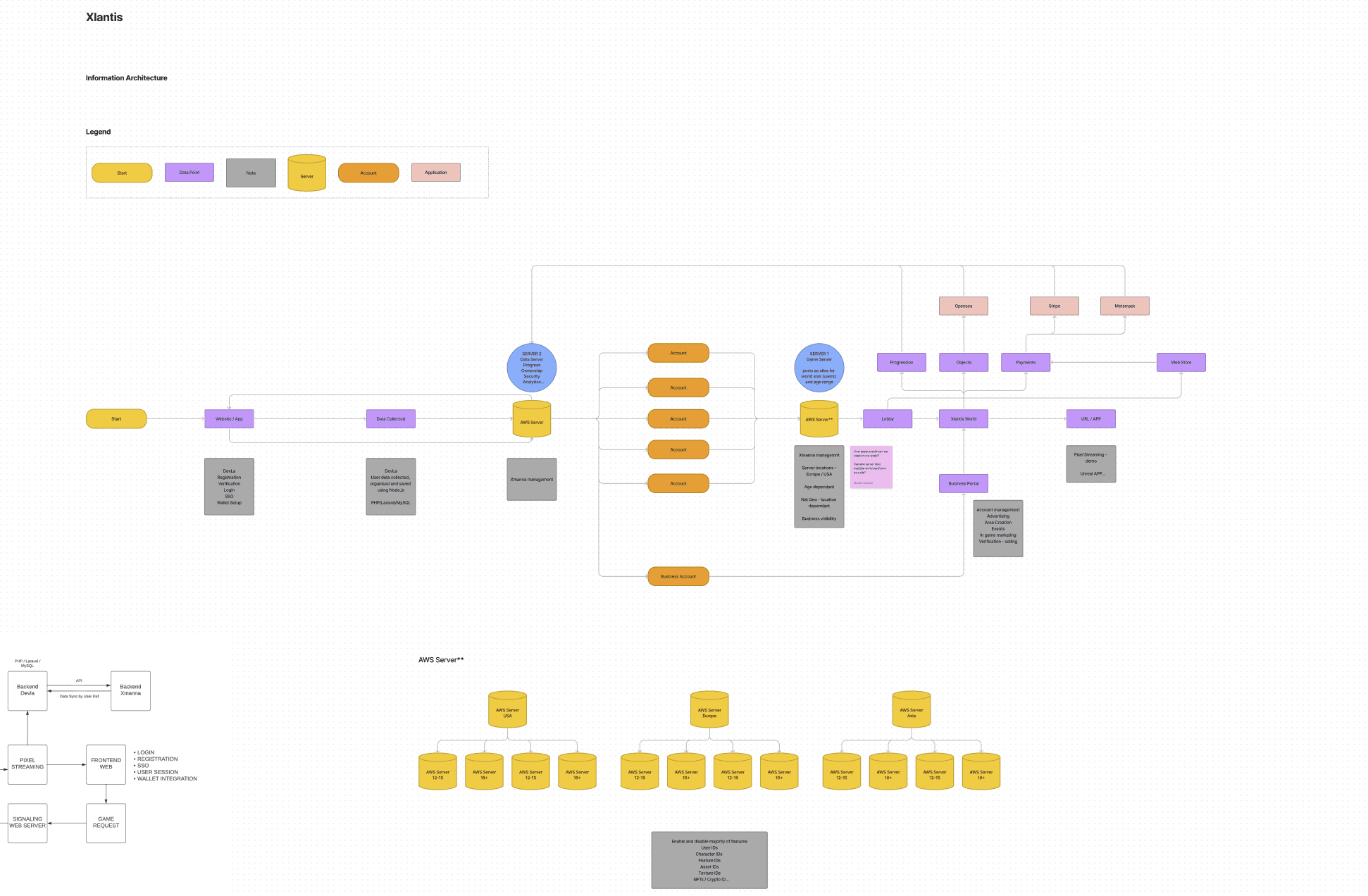
The positive turning point in the project came when the team began to think of XLANTIS not as a single digital product but as a platform ecosystem.
Rather than designing one continuous experience all built and happening at once, the world could be structured as a network of interconnected environments each hosting different activities, events and communities bringing in brands and events at different time periods.
Within this structure, users could move at different times between different types of experiences:
interactive games
sports and fan engagement zones
virtual concerts and entertainment venues
branded spaces and social hubs.
This modular world design allowed the platform to start small and to grow organically as new partners and communities joined the ecosystem.
Technologically, the use of Unreal Engine enabled the creation of large-scale environments with cinematic visual quality. Combined with cloud streaming technologies, the platform could deliver immersive experiences without requiring high-end gaming hardware.
Another critical element was digital ownership. Through blockchain integration and tokenised assets, users could own land, participate in events, and interact with branded experiences in ways that mirrored real-world engagement models.
By combining immersive world design, real-time interaction, and digital ownership systems, the project created a foundation for a next-generation entertainment platform.
The positive turning point in the project came when the team began to think of XLANTIS not as a single digital product but as a platform ecosystem.
Rather than designing one continuous experience all built and happening at once, the world could be structured as a network of interconnected environments each hosting different activities, events and communities bringing in brands and events at different time periods.
Within this structure, users could move at different times between different types of experiences:
interactive games
sports and fan engagement zones
virtual concerts and entertainment venues
branded spaces and social hubs.
This modular world design allowed the platform to start small and to grow organically as new partners and communities joined the ecosystem.
Technologically, the use of Unreal Engine enabled the creation of large-scale environments with cinematic visual quality. Combined with cloud streaming technologies, the platform could deliver immersive experiences without requiring high-end gaming hardware.
Another critical element was digital ownership. Through blockchain integration and tokenised assets, users could own land, participate in events, and interact with branded experiences in ways that mirrored real-world engagement models.
By combining immersive world design, real-time interaction, and digital ownership systems, the project created a foundation for a next-generation entertainment platform.

As the concept matured, the structure of the XLANTIS ecosystem became clearer.
Instead of a single-purpose platform, XLANTIS evolved into a digital entertainment hub capable of supporting multiple industries. Sports organisations could engage fans through virtual environments, entertainment providers could host live events and communities could create their own digital spaces when ever they wanted.
The platform also opened opportunities for new forms of digital engagement. Fans could participate in events, explore branded experiences and interact with digital assets tied to teams, artists, or entertainment properties.
This flexibility allowed the platform to support a wide range of experiences while still maintaining a coherent virtual world.
Ultimately, the project demonstrated how immersive technology, gaming engines and digital ownership models could converge to create entirely new forms of digital interaction.
As the concept matured, the structure of the XLANTIS ecosystem became clearer.
Instead of a single-purpose platform, XLANTIS evolved into a digital entertainment hub capable of supporting multiple industries. Sports organisations could engage fans through virtual environments, entertainment providers could host live events and communities could create their own digital spaces when ever they wanted.
The platform also opened opportunities for new forms of digital engagement. Fans could participate in events, explore branded experiences and interact with digital assets tied to teams, artists, or entertainment properties.
This flexibility allowed the platform to support a wide range of experiences while still maintaining a coherent virtual world.
Ultimately, the project demonstrated how immersive technology, gaming engines and digital ownership models could converge to create entirely new forms of digital interaction.
Conclusion
Conclusion
The XLANTIS project explored how immersive technology could reshape the way people interact with digital entertainment and communities.
By combining game engine technology, social interaction, live events, and digital ownership, the platform aimed to create a persistent virtual world where users could explore, participate, and connect in new ways. Rather than focusing on a single experience, XLANTIS embraced the idea of a platform ecosystem—one capable of supporting gaming, sports engagement, virtual events, and community-driven environments at anytime, not all the time.
However, building a metaverse platform requires significant investment, long development timelines, and strong network effects to compete with established platforms. Despite the ambition of the concept and the progress made during development, the project ultimately struggled to secure the level of funding required to fully realise the platform in an increasingly crowded and competitive market.
Without the necessary financial backing to scale the infrastructure, partnerships, and user ecosystem, the project was unable to progress beyond the concept stage and was eventually closed down.
While the platform did not reach its full potential, the project provided valuable insights into the challenges of building large-scale digital ecosystems. It reinforced how critical timing, investment, and market positioning are when launching ambitious new platforms, particularly in rapidly evolving technology spaces such as the metaverse. Even though it did not get released it was a super enjoyable project to work on.
The XLANTIS project explored how immersive technology could reshape the way people interact with digital entertainment and communities.
By combining game engine technology, social interaction, live events, and digital ownership, the platform aimed to create a persistent virtual world where users could explore, participate, and connect in new ways. Rather than focusing on a single experience, XLANTIS embraced the idea of a platform ecosystem—one capable of supporting gaming, sports engagement, virtual events, and community-driven environments at anytime, not all the time.
However, building a metaverse platform requires significant investment, long development timelines, and strong network effects to compete with established platforms. Despite the ambition of the concept and the progress made during development, the project ultimately struggled to secure the level of funding required to fully realise the platform in an increasingly crowded and competitive market.
Without the necessary financial backing to scale the infrastructure, partnerships, and user ecosystem, the project was unable to progress beyond the concept stage and was eventually closed down.
While the platform did not reach its full potential, the project provided valuable insights into the challenges of building large-scale digital ecosystems. It reinforced how critical timing, investment, and market positioning are when launching ambitious new platforms, particularly in rapidly evolving technology spaces such as the metaverse. Even though it did not get released it was a super enjoyable project to work on.
Takeaways
Takeaways
The XLANTIS project highlighted several important lessons about building next-generation digital platforms.
First, ambitious platform ecosystems require significant funding and long-term investment to reach critical mass. Even strong concepts and technical foundations must compete for attention in crowded markets.
Second, timing plays a major role in emerging technology sectors. During the rise of metaverse platforms, many companies pursued similar visions, making differentiation and sustained investment essential.
Third, designing large digital worlds requires thinking beyond the product itself and considering the entire ecosystem—partners, communities, and content creators that bring the world to life.
Finally, not every ambitious concept succeeds commercially, but projects like XLANTIS still provide valuable experience in building complex systems, exploring emerging technologies, and pushing the boundaries of digital interaction.
The XLANTIS project highlighted several important lessons about building next-generation digital platforms.
First, ambitious platform ecosystems require significant funding and long-term investment to reach critical mass. Even strong concepts and technical foundations must compete for attention in crowded markets.
Second, timing plays a major role in emerging technology sectors. During the rise of metaverse platforms, many companies pursued similar visions, making differentiation and sustained investment essential.
Third, designing large digital worlds requires thinking beyond the product itself and considering the entire ecosystem—partners, communities, and content creators that bring the world to life.
Finally, not every ambitious concept succeeds commercially, but projects like XLANTIS still provide valuable experience in building complex systems, exploring emerging technologies, and pushing the boundaries of digital interaction.
Prototype
Prototype
Marketing
Marketing